Monday, May 23, 2022

The Magnificent Six – Abarth’s '60s World Championships

Within the FIA’s World Sportscar Championship, Abarth reigned supreme for six consecutive seasons in the early '60s.  During the period, categories and classes were subject to several revisions.  For example, in 1962, Abarth’s campaign was for the WSC’s subsidiary competition, ‘The International Championship for GT Manufacturers,’ and the marque’s winning points total was accrued within the GT 1000 cc class.  The following year, Abarth’s effort was concentrated on the 1300 cc GT class.  In 1966 the title, ‘International Sports Car Championship’ was introduced.  Under this, Abarth ran primarily in the ‘Sports’ category, and, within this, Division I (1300 cc).  In response to this evolving competition framework, Abarth varied its track models focus, from the Fiat Abarth 1000 Bialbero GT, through the Abarth Simca 1300 GT, to the Abarth 1300 OT.  Throughout the period, several other related Abarth models competed in the WSC events, including 700 cc and Monomille versions of the Fiat-engine coupes, 1300 S, 1600 OT, Abarth Simca 2000 GT, 1000 and 2000 SP, 1000 Berlinetta and 1000 OTS.
 
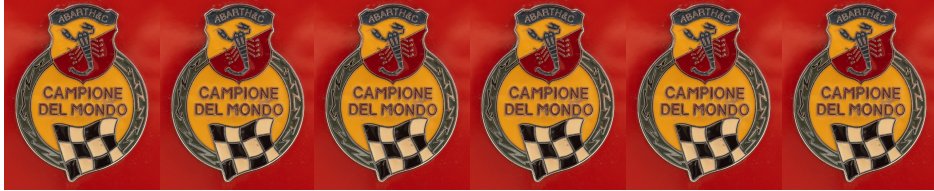
Abarth frequently featured its championship achievements in its in-period advertising/promotional material, (see examples, illustrated below), and they are referenced by the marque to this day – no wonder, it was quite a feat!


Listed below are details of the (class) winning car/driver for the championship events for seasons 1962 – 1967, together with notes on lesser placings and relevant photographs.

1962 
International Championship for GT Manufacturers; GT 1.0 class victories:

Sebring (3 hours)
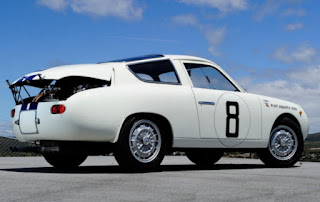
Bruce McLaren     Fiat Abarth 1000 Bialbero GT  #8


Circuit del Garda
Ludovico Scarfiotti     Fiat Abarth 1000 Bialbero GT  #56

This event was dominated by Fiat Abarth cars, with Gianni Lado 1st in the GT700 class.

Avus 
Robert Jenny     Fiat Abarth 1000 Bialbero GT  #40

Another event at which Abarth was a major presence, main opposition coming from the BMW 700 in the lower capacity class, which was nonetheless won by Teodoro Zeccoli in the 700 version of the Abarth GT.

Nurburgring 1000
This event was not significantly contested by Abarth (though Porsche Abarth GTLs were 1st/2nd in the GT1.6 class).  Claude Bobrowski/Claude Dubois Jean (entered by Jean Amic), Fiat Abarth 1000S, finished 3rd in the S1.0 class.

Pergusa (Coppa Citta di Enna)
Marsilio Pasotti/Giancarlo Scotti     Fiat Abarth 1000 Bialbero GT  #58 

Abarth cars were placed 1st to 6th, with Giovanni Pessina 5th and the GT700 class victor. 

Nurburgring 500
Eberhard Mahle     Fiat Abarth 1000 Bialbero GT  #86

Also taking class wins for Abarth at this event: Tommy Spychiger, GT700. and Marsilio Pasotti, (850 TC) Touring850. 

Bridgehampton 400
Bob Grossman     Fiat Abarth 1000 Bialbero GT  #9
 
Overall victory at this race went to a Porsche Abarth GTL driven by Bob Holbert.
 
1000 km. of Paris  
Though the best-placed 1000 Bialbero GT finished down in 14th, (Claude Bobrowski/Frank Ruata), this race was significant in that the GT1.3 class was won by Hans Herrmann/Mauro Bianchi in the new Abarth Simca 1300, #33. 

Championship points table:


1963
International Championship for GT Manufacturers; GT 1.3 class victories, (and significant other Series/Sub-Division results): 

Sebring (3 Hours)
Hans Herrmann, (Abarth Corse)     Fiat Abarth 1000 Bialbero GT  #18 

Mauro Bianchi (#19) was placed second in a similar car. 

Circuit del Garda
Marsilio Pasotti/Benedetto Guarini     Fiat Abarth 1000 Bialbero GT  #9 

Nurburgring (1000 kms) 
A rare lack-lustre event for Abarth, all three works Abarth Simca 1300 Bialbero GTs, including the pole sitter of Bianchi/Mahle, failing to finish.


Consuma (Hill Climb)
Mauro Bianchi     Abarth Simca 1300 Bialbero GT  #102 

Whilst Bianchi was 2nd overall and first in GT1.3, Tommy Spychiger was first in the 1.0 class in a 1000 Bialbero, (#22).


Monza (3 Hours)
Romano Perdomi (‘Tiger’)     Fiat Abarth 1000 Bialbero GT  #14

Wiesbasen (Rallye)
Peter Ettmuller/Xavier Perrot     Fiat Abarth 1000 Bialbero GT  #43
 
Schauinsland (Freiburg) (Hill Climb)
Giampiero Biscaldi     Abarth Simca 1300 Bialbero GT  #9 

Biscaldi took the GT 1.3 class, and there were also Abarth class victories for Tommy Spychiger (S/P1.0) and Vittorio Venturi (GT1.0).


Pergusa (Coppa Citta di Enna)
Romano Perdomi (‘Tiger’)     Fiat Abarth 1000 Bialbero GT  #52
 
The GT700 class was won by Gian Battista Mainetti for Abarth. 

Ollon-Villars (Hill Climb)
Giampiero Biscaldi     Abarth Simca 1300 Bialbero GT  #74
 
Nurburgring (500 kms)
Anzio Zucchi     Fiat Abarth 1000 Bialbero GT  #104


Monza (Coppa Inter-Europa)
Tommy Spychiger     Abarth Simca 1300 Bialbero GT  #16
 
Tour de France
Not a good race for Abarth – highest finisher, 8th in class, was an 850.


Bridgehampton 500
Tom Fleming/Otto Linton/Ray Heppenstall     Abarth Simca 1300 Bialbero GT  #3 

The Championship points tables were finalised: 


1964
International Championship for GT Manufacturers; Division I (1300 cc) victories: 

Sebring (12 hours)
Tom Fleming/Otto Linton/Jimmy Diaz     Abarth Simca 1300 Bialbero  #62


Monza (GT Grand Prix)
Franco Patria     Abarth-Simca 1300 Bialbero GT  #19      

This was a 1-2-3 for Abarth in the 1.3 GT class.  The 1.0 class was won by Anzio Zucchi, (Fiat-Abarth 1000). 

Consuma (Hill Climb)
Secondo Ridolfi     Abarth Simca 1300 Bialbero GT  #304

Abarth-Simca 1300 Bialbero GTs filled 1st to 9th place in class. 

Nurburgring (1000 kms)
Hans Herrmann/Fritz Jüttner     Abarth Simca 1300 Bialbero GT  #8


Schauinsland (Freiburg) (Hill Climb)
Hans-Dieter Dechent     Abarth Simca 1300 Bialbero GT  #12 

The winning Abarth Simca was entered by Scuderia Lufthansa.  Fiat Abarth GTs were 1st and 2nd in the 1.0 GT class.


Grosser Bergerpreis (Sierre Crans-Montana) (Hill Climb)
Denis Borel     Abarth Simca 1300 Bialbero GT  #113 

Nurburgring (500 kms)
Ernst Furtmayr/Hans-Dieter Dechent     Abarth Simca 1300 Bialbero GT  #97
 
The Furtmayr/Dechent car was another entry by Scuderia Lufthansa.  Overall winning car, running in the Prototype GT 1300 class, was the Abarth-Simca 1300 Bialbero GT of Hans Herrmann/Klaus Steinmetz (#130):


Bridgehampton (500 kms)
Although various Abarth GTs ran at the Saturday race, no championship points were scored for the marque. 

Paris, Montlhéry (1000 kms)
Herbert Demetz/Anton Fischhaber     Abarth Simca 1300 Bialbero GT  #52 

A strong 1-2-3 in class finish for Abarth Simca.

Top of the final points table for the GT championship (Division I) looked like this:

Abarth Simca was placed 3rd in Division II. 

Note: The International Championship for GT Manufacturers was run within 3 divisions: Division I – Under 1300cc; Division II – Under 2000cc; Division III – Over 2000cc.  Although there were 20 events, not all counted for each division.  For example, the opening round at Daytona counted for Divisions II and III, but not for I, whereas Round 4, Monza 3 Hours counted only for Division 1.  Points were awarded to the top six positions in each division in each race on a 9-6-4-3-2-1 basis with a points coefficient applied which reflected the relative arduousness of the event; for example, the 24 Hours of Le Mans warranted a 2.0 coefficient, the Nurburgring 1000 Kms 1.6, whereas the hill climbs tended to be just 1.0.  Only the best six race results plus one hillclimb result were retained towards the final classification.

1965
International Championship for GT Manufacturers; Division I (1300 cc) victories:
 
Sebring (12 hours)
Only one Abarth Simca 1300 and one Abarth Simca 2000 ran, neither finishing this race.
 
Imola (GT Grand Prix)
Herbert Demetz     Abarth-Simca 1300 Bialbero GT  #48
 
This was a 1-2-3 for Abarth Simca and Fiat Abarth Berlinettas were 4th to 8th.
 
Monza (Coppa Inter-Europa)
Klaus Steinmetz     Abarth-Simca 1300 Bialbero GT  #14
 
Another Abarth Simca 1-2-3.


Targa Florio
Salvatore Calascibetta/Giuseppe Virgilio      Abarth-Simca 1300 Bialbero GT  #26

Nurburgring (1000 Kms)
Salvatore Calascibetta/Giuseppe Virgilio      Abarth-Simca 1300 Bialbero GT  #95 

Another Abarth Simca 1-2-3.


Mugello (GP)
No provision here for the 1.3 GT class.  A 2.0 version of the Abarth Simca GT placed 2nd in the 2.5 GT class. 

Rossfeld (Hill Climb)
Again the 1.3 GT class was not contested.  However, Hans Herrmann was 4th overall in a 2000 OT and two Abarth Simca 2000 GTs also featured in the top ten. 

Le Mans (24 Hours)
No Abarth cars started this race. 

Reims (12 hours)
No Abarth entries.
 
Bolzano-Mendola (Hill Climb)
Giuseppe Dalla Torre     Abarth Simca 1300 Bialbero GT  #214 

2.0 versions were 1st and 2nd overall, the winning car driven by Herbert Demetz. 

Schauinsland (Freiburg) (Hill Climb)
Roland Stierli     Abarth-Simca 1300 Bialbero GT  #11 

Pergusa (Coppa Citta di Enna)
No Abarth entries.

Ollon-Villars (Hill Climb)
Denis Borel     Abarth Simca 1300 Bialbero GT #68 

Nurburgring (500 kms)
Kurt Ahrens, Jr.     Abarth-Simca 1300 Bialbero GT  #44 

Bridgehampton (500 kms)
No Abarth Simca GTs ran at this event. 

Championship points table:

1966
International Sports Car Championship; Sports, Division I (1300 cc) victories: 

The season saw the Abarth Simca 1300 GT replaced as the marque’s primary machine by the 1300 OT.  It featured many improvements though still Simca-based.  The car was not homologated until May. 

Nurburgring (1000 Kms)
Jo Ortner/Kurt Ahrens Jr./Ernst Furtmayr/Wolf-Dieter Mantzel     Abarth 1300 OT  #83 

1300 OTs finished 1-2-3 in class.


Mugello (GP)
Luigi Taramazzo/Giulio Bona     Abarth 1300 OT  #136 

Pergusa (Coppa Citta di Enna)
Alfio Gambero     Abarth 1300 OT  #22 

An Abarth 1-2-3 in the Sports 1300 class, with an Abarth Simca 1300 in 3rd.

Sierre Montagna (Hill Climb)
Jean-Daniel Grandjean     Abarth-Simca 1300 Bialbero GT  #73 

Another Abarth 1-2-3, with Abarth Simcas in 1st and 2nd and a 1300 OT in 3rd

Nurburgring (500 kms)
Ernst Furtmayr     Abarth 1300 OT  #35 

Zeltweg (500 kms)
Jo Ortner     Abarth 1300 OT  #28 

An event dominated by Porsche 906s, but Abarth scored another 1-2-3 in class.

Points at season’s end were:


1967
International Sports Car Championship; Sports, Division I (1300 cc) victories: 

Targa Florio 
Guido Garufi/Giuseppe Ferlito     Abarth 1300 OT  #98


Le Mans (24 Hours)
Marcel Martin/Jean Mesange     Abarth 1300 OT  #64           

Entered by Ecurie du Maine, #64 finished 16th overall and 1st in class.  It is the subject of a Spark 1/43 scale model.


Hockenheim (GP)
Toine Hezemans     Abarth 1300 OT  #3 

This event yielded a 1-2-3-4 for the Abarth 1300 OTs.  The Spark model mentioned above is also available liveried, with #3, as it ran at this event. 

Mugello (GP)                                     
Mauro Nesti/Ernst Furtmayr/Toine Hezemans     Abarth 1300 OT  #90 

A 1-2 in class for Abarth, and, once again, a race-specific Spark model was produced. 

Pergusa (Coppa Citta di Enna)                 
Alfio Gambero     Abarth 1300 OT  #26 

An Abarth 1-2-3, with an Abarth Simca 1300 GT in 3rd.

Zeltweg (500 kms)
Jo Ortner     Abarth 1300 OT  #25 

Again an Abarth 1-2-3 (all 1300 OTs).

Ollon-Villars (Hill Climb)
Toine Hezemans     Abarth 1300 OT  #148 

A Best-Model 1/43 die cast was made carrying Hezemans's number for this hill climb. 

Nurburgring (500 kms)
Ernst Furtmayr     Abarth 1300 OT  #42 

Last race of the season and yet another win for the OT. 

Final points for the championship (Sport, Division 1, 1300 class):


Thursday, April 7, 2022

The Fiat 850-based Abarth OT Coupes

Whilst the Fiat 600 had provided a good chassis/mechanical basis for the scorpion-badged Grand Tourers of the early Sixties, it had been necessary for Abarth to create bodies of a style appropriate for the GT designation.  These cars reached their performance and aesthetic high point around 1963/4 with the 1000 Bialbero, alongside the Simca-based 2000 GT.  Just at that time (March 1964) Fiat introduced the 850, a model family that not only offered new performance possibilities with the enlarged engine capacity, but also a ready-made suitably styled coupe body.  Abarth was quick to get to work on the 850 with a 60 bhp Berlina OT (Omologata Turismo) 982 cc version in October.  The Coupe was introduced by Fiat in 1965 and that September Abarth launched its OT 1000 version.  The enlarged Tipo 202 engine was good for 60-65 bhp.

Abarth’s considerable achievement in taking class ‘World Championships’ in the period 1962-67 was in the main due to the performance of the 1000 GTs, Simca platform GTs, 1000 Berlinas and 1300 OTs.  The OT 1000 Coupe was not favoured for international race participation but was successful from the outset as a customer racer for national events.  The OTR version appeared along with the OT in autumn 1965.  The car in standard form (74 bhp) was suitable as an ‘off the shelf’ race car or, uprated with factory options, in enhanced competitiveness trim, (95-105 bhp).  The engine was based on the Tipo 200 but with a new ‘radiale’ head and improved cooling thanks to a nose-mounted radiator.  The form of the combustion chambers in the radiale engine is apparent in the photograph below – two overlapping hemispherical voids which, together with individual, separate, exhaust ports and twin Weber 40 DCOE carburettors, made for highly efficient atomisation, induction and gas flow characteristics.  As a result, the engine was considered to be ground-breaking in developing 100 bhp from a sub-1000 cc capacity.  The performance was all the more remarkable since the engine was capable of running at over 7000 rpm despite having pushrod actuated valve gear.


The adoption of the forward position radiator dictated the need for redesign of the car’s front panel to provide an air intake aperture.  The resulting grille, script and central badge lent the nose a distinctive and aesthetically pleasing character.


However, exploitation of the new engine was soon compromised.  In the U.S., the motorsport-governing Sports Car Club of America, took against the OTR and ‘banned’ it, believing the extent of modification to be extreme and outside the spirit of the rules of their relevant racing classes.  This significantly constrained sales potential in such an important market for Abarth.  Accordingly, it is generally held that less than forty OTRs were built by Abarth.  The Sixties were notable for the instability of racing class definitions and related homologation rules.  Abarth was frustrated in being unable to gain Group 2 homologation for the radiale cylinder head, only able to achieve this in 1970.  For Abarth it was important to have models which were ‘legal’ for as many classes as possible.  This gave rise to a further 1000 Coupe variant – the OTS, utilising the OTR body but powered by the standard cylinder head engine (67 bhp).  This was successfully homologated in 1966 for FIA-governed GT racing.  Alongside, a higher powered (90 bhp, achieved with carburation/manifolding upgrades) OTSS version was also offered.

1966 was a hectic year at Corso Marche, as indicated by this list of newly emerging variants on the Fiat 600 platform: OT 1600 Prototipo; 1000 TC Berlina Corsa; OT 2000 Coupe America; OT 2000 Coupe; 1000 TC Radiale Berlina; OT 1300 Sport; OT 1600 Coupe Prototipo.  And there was one more, which is especially relevant to this post – OT 1300/124 Coupe.  Unveiled at the Turin show in November, this was somewhat unusual in comparison with the 1000 versions since the engine was only mildly modified by Abarth.  However, the larger capacity of the 124 engine, oversquare bores and raised compression ratio enabled a relative unstressed output of 75 bhp.  Both front and rear suspensions were also upgraded whilst the ride height was lowered and the track increased.

Abarth won the last of its 6 consecutive FIA championships in 1967 with the OT 1300 – however, to avoid possible confusion, it should be understood that this car was Simca-based and featured a Sibona & Basano-made fibreglass body, unrelated to the Fiat 850 coupe shell.

In 1968 Fiat facelifted the 850 Coupe, adding ‘Sport’ to the model designation.  From a mechanical viewpoint, the main upgrade involved the engine, capacity being taken out to 903 cc.  Cosmetically, the most notable changes affected the front end, incorporating 4 lamps, repositioned indicator lamps and reshaped/front panel featuring a ‘v’ shaped chrome embellisher.


An Abarth OT 1000 version of the 2nd Series Coupe was launched in 1969 and for some time this was in production alongside a similarly updated OT 1300/124 Coupe, ending in 1970.


Tuesday, March 15, 2022

Corse Alfasud

When I started working at BMW Concessionaires GB Ltd in 1971, our cars were not ten-a-penny on London’s more affluent streets. The trendy thing to drive then was an Alfa Romeo. The 105 Series Giulia models offered a heady mix of great styling, courtesy of Bertone and Pininfarina, together with exhilarating performance reflecting the Marque’s racing successes, primarily with the brilliant GTA variant. On my first visit to Munich, I was told that with the impending Tii version of the 2002 and further development of the E9 coupe, it was hoped that Alfa would find itself with a worthy Bavarian competitor. By the time I moved to Alfa Romeo GB Ltd. (ARGB) at the end of the decade, places like Kensington and Hampstead were knee-deep in BMWs, whereas, though its UK registrations were peaking, Alfa Romeo’s reputation and market share was beginning its woeful decline. Both the sales volume zenith and the collapse of esteem for the Marque’s products were mainly attributable to the Alfasud. 

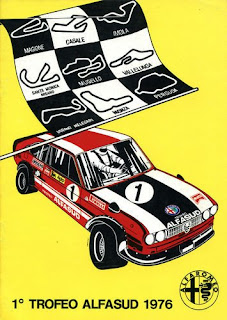
Whatever the big picture aspects of the Alfasud in terms of its commercial viability and effect on Alfa Romeo’s prestige, its specification made for the basis of an excellent small racing saloon, given its light weight, compact footprint, rev-happy flat four engine and inboard front brakes. In standard form the throttle response was very good and it was soon found that even with just the substitution of carburettor make/model – Weber or Dellorto – increased horsepower was relatively easy to achieve. With numbers of ‘Sud’s appearing on circuits in 1975 – notably in Austria - recognising the promotional potential, Alfa Romeo instituted the ‘Alfasud Trofeo’ race series in 1976. The version to be used was the 1.3 Ti which had supplemented the range in ’73, initially in 1200 cc form. The car could be modified by the use of an Autodelta-marketed kit of parts. In standard production specification the Ti’s engine produced 75 bhp, whereas a Trofeo version managed 115 bhp on the twin Webers included in the Autodelta kit. Given a minimum weight of 800 kgs, this made for a quick car, further enhanced by the other kit components which included competition exhaust, springs and dampers, wheel arch extensions and lightweight Campagnolo alloys. In Italy the series was comprised of 9 races, at Magione, Casale Monferrato, Imola, Misano, Mugello, Vallelunga, Varano, Monza and Pergusa.


The inaugural championship was won by a clear margin by Filippo Niccolini, from Claudio Pizzi.  Niccolini was the victor at five of the championship rounds.  His car was advertised for sale in 2016 by Weekend Heroes of Munich:


With increasing awareness across Europe, Trofeo series were also introduced in Austria, Germany and France.  Confirming the high level of interest from competitors, circuits and enthusiasts, 1977 also saw the establishment of a ‘Trofeo Europa Alfasud,’ bringing together the better drivers from the various national series.

The Europa series gained additional attention by the running of some rounds as support races to Formula One Grands Prix.  First champion was Italy’s Aldo Cerruti.  Notable among the Trofeo Europa competitors was Gerhard Berger, future F1 high-achiever with McLaren and Ferrari, who took seventh place in 1981.

Gerhard Berger and his Trofeo Alfasud

Alfasud Trofeo racing tended to be close and frantic, as can be seen in the photograph below:

In the UK, Alfasuds also appeared on-track in 1976, run by the Campari-sponsored Dealer Team.  Two cars were entered to the Tourist Trophy for Jon Dooley/Simon Kirby/Rex Greenslade.  Another ‘Sud was entered for this event by the stalwart Bolton dealership, Westune – drivers, Malcolm Wayne/John Myerscough. 

From 1977, examples of the Sprint variant began to compete.  In Division 1 (1300) of the European Touring Car Championship, Sprints of Team 43-70 were class winners in 9 of the 11 rounds and clear class champions.

Sprint of Marquez/Perrado (Team 43-70) at Brno, ETCC, 1977

1978 proved to be a much tougher year for the Sprints in the ETCC.  Of the twelve rounds, a Sprint was able to take the class victory at only two events – at the Nurburgring and Silverstone.  Early in the season, Fiat 128 Coupes and Alfa GT Juniors had better pace, and, later, the Skoda 130RS proved superior.  However, a Sprint was 1st in class at 5 races, and consistent results from the Belgian pair, Richard Mattozza and Jacques Berger, were a major contribution towards Alfa Romeo securing the manufacturer’s Division 1 championship.  But by the end of the decade, the ‘Sud in both Berlina and Sprint form was not a significantly competitive race car, and results were mediocre at best. 

Development of the Alfasud during the late Seventies/early Eighties took production versions’ power output up to 105 bhp, with the 1.5 litre capacity engine.  The Sprint eventually gained a 1.7 variant, and this boasted 112 bhp.  Nevertheless, neither this car, nor the ‘Sud’s replacement, the 33, were found to be a good basis for a competitive racing car.  At ARGB we dabbled with a turbocharged version of the 33, (around 130 bhp), in conjunction with Terry Drury Racing, but this too proved to be an ineffective circuit racer.  So there was quite a hiatus in motorsport terms, before the advent of the 155, which would certainly turn out to be a formidable and successful touring car for the Marque.


Tuesday, March 1, 2022

Alfa Romeo TZ1

The Alfa Romeo Giulietta SZ and TZ models are well documented in Marcello Minerbi’s 1985 study, published by La Mille Miglia Editrice.  In the book’s foreword, Giuseppe Busso outlined the somewhat tortured gestation of the TZ, from initial concept in 1955, through the ‘exploratory,’ but flawed, Abarth collaboration known as the 750 Competizione/Sport, on to the 1961 spider prototype. 

Courtesy Alfa Romeo Automobilismo Storico

Despite the disappointment of the 750, Alfa Romeo design chief, Orazio Satta Puliga (Satta) and Busso determined that Alfa Romeo should create a lightweight, (tubular spaceframe chassis), sporting GT, with serious racing potential.  Power would come from the four cylinder engine that was such a distinctive feature of the Giulietta saloons and coupes with which Satta had achieved much commercial and reputational success for the Marque.  The model and its engine had enabled Alfa Romeo to gain a foothold in the mass market.  Necessary as this was, both Busso and Satta remained true to Alfa’s romantic sport/racing heritage, the latter saying:

Alfa Romeo is not merely a make of automobile, it is truly something more than a conventionally built car. There are many automotive makes, among which Alfa Romeo stands apart. It is a kind of affliction, an enthusiasm for a means of transport. What it resists is definition. Its’ elements are like those of the human spirit which cannot be explained in logical terms. They are sensations, passions, things that have much more to do with a man’s heart than with his brain.

So, in 1960, Busso’s team built a prototype chassis, which, on completion, was shipped to Zagato.  (Minerbi’s text is ambiguous, suggesting that there were two examples involved).  The body fabricated by the carrozziere was a spider with removable targa-type hardtop.  Progress was not especially rapid and it was not until the autumn that testing was begun.  On track, at Monza, the car’s aerodynamics were soon found to be flawed.  This consideration, coupled with handling issues – mainly related to the new (independent) rear suspension, saw the car turning disappointing lap times – unable to match those then being achieved by the established, but lower engine capacity (1300) Giulietta Sprint Zagato.  I took nearly twelve months for a full solution to be found in regard to the rear suspension, but the drag problem was sooner resolved by the adoption of a fully closed, streamlined roof – a TZ now looked like a TZ!  However, further experimentation with points of detail, such as the nose length/profile, delayed the emergence of the definitive TZ1 form until March 1963, after presentation at the Turin Motor Show in the previous October.  Designated as tipo 105.11, series production was organised on a dispersed basis: chassis by SAI Ambrosini, a now defunct aircraft constructor, then seeking to diversify; body by Zagato; engine upgrading and suspension build was entrusted to Auto Delta, the business set-up by Carlo Chiti and Lodovico Chizzola after their departure from Ferrari following the infamous Night of the Long Lives saga of October 1961.  Subsequently restyled as Autodelta SpA and integrated with Alfa Romeo SpA, Chiti’s enterprise also took responsibility for further development of the car together with its racing participation and evolution.  In this role, Autodelta can be seen as a precursor to operations such as Porsche’s Weissach facility and BMW’s M Division.  And an excellent team it was too, with many touring car (especially with the Giulia GTA/GTAm) and prototype sports car (Alfa 33) championship successes.

An account of the ‘birth’ and initial problems of the TZ1 appeared in the March 1992 issue of Autocapital magazine – it can be read here.


The number of TZ1s built from 1963-65 has been variously reported, with most estimates being close to the figure of 100, as was required for FIA homologation purposes.  Based on the register included in Minerbi’s book, and taking account of some additional insight by Luigi Fusi, (lifetime employee at Alfa Romeo and the company’s archive curator), the correct number is 109.  (The aspect which gives rise to most doubts is the period during which the TZ2 model emerged, with chassis numbers previously thought TZ1-related now attributed to TZ2s, and a few TZ1s physically converted to TZ2 specification.)

Copyright © - Collector Studio

There is particular uncertainty about the very first production chassis number, #750001 – although Minerbi records it as ‘Restored. Showroom car.  Present owner: M. Hayashi, Japan,’ it is elsewhere stated that it was destroyed during the production run, and, alternatively, assigned to a car not built until 1965.  However, it is not unexpected for there to be a measure of vagueness and conflicting reports about such specialised cars built now so long ago.  Mostly, the first dozen cars are described as race versions, initially owned/run by Alfa Romeo itself and/or factory-supported teams including Milan-based Scuderia St. Ambroeus.  Both #750003 and #750006 were prepared for and run in 1964 high profile events such as the Le Mans 24 Hours, the Targa Florio and the Nurburgring 1000 kms.  At Le Mans, several drivers were involved, including, Roberto Bussinello, Jean Rolland, Fernand Masoero, Giampiero Biscaldi, Giancarlo Sala and Bruno Bonini.  #006 finished in 15th place.  Even better, #011 was 13th and winner of the GT1.6 class, driven by Bussinello and Bruno Deserti.  At the Nurburgring, Scuderia St. Ambroeus again ran three TZ1s, and although one suffered engine failure, #028 was the GT1.6 class winner, finishing 13th overall, with #011 next up in 14th.  The team was also successful at the Targa Florio, #006 and #031 coming in 3rd and 4th, 1st and 2nd in class.  From this selection of results it will be seen that the TZ1 was immediately a highly competitive race car at major events.  Indeed, it had achieved its first class win – with Lorenzo Bandini at the wheel - before the close of 1963 at the (admittedly less prestigious) Coppa F I S A (Monza), with examples driven by, Bussinello, Giancarlo Baghetti and Consalvo Sanesi, finishing in overall 3rd, 4th, and 5th.


In 1965 the TZ2 entered competition and took the class honours in the Monza 1000 kms event.  However, TZ1s continued to achieve consistent success in the GT1.6 class at several significant meetings – at that Monza race, for example, taking 2nd to 5th places in class.  Lucien Bianchi and Jean Rolland drove a TZ1 to 7th overall and 1st in class at the Targa Florio, with 2nd to 5th places also claimed by the model.  In the Mugello round of the World Sportscar Championship, Carlo Zuccoli and Guido Rava took the GT1.6 class victory.  At Enna, Guido Rava won the GT1.6 class in the Coppa Citta.  There were Hillclimb class victories at Stallavena, Bologna Raticosa, Coppa della Sila, Bolzano-Mendola and Desana-Sestrieres.  Beyond Italy, the TZ1 was also racking up class victories in Germany – at the Avus DARM meeting, (Jochen Neerpasch), in England – at Donnington, (Boley Pittard), and was being campaigned in SCCA events in the U.S.

#108. Class winner, 1965 Targa Florio   ©MotorsportImages


The results of the following year’s Targa Florio were salutary – an Autodelta TZ2 managed 4th overall and the class victory, (with team cars also 2nd and 3rd in class,) whilst TZ1s were no higher overall than 24th and 4th in class.  For the 1966 Le Mans 24 Hours, 2 cars were entered, but, as was the case with several TZ2s, they did not run.  Broadly, the season was a disappointing one for the TZ1 – it was not matching the pace of the TZ2 or its direct competitors such as the MGB and the Lotus Elan.  But as the TZ1’s achievements diminished, the TZ2 scored good results and, subsequently, the Giulia GTA became Autodelta’s winning machine through the latter half of the decade.

Minerbi’s register suggests that 9 cars were constructed as TZ2s, the final chassis number being #750117, built in 1967.  The model had been launched at the Geneva Show in March 1965.  Significant changes from the TZ1 and which were instrumental in how quickly and comprehensively the TZ2 displaced the superseded model’s race competitiveness, were the body’s fibreglass construction, general lowering of engine/suspension/body and adoption as standard of the Conrero-built 165 bhp twin spark, dry sump version of the 1.6, 4 cylinder engine.  The body materials revision had been presaged by the use of fibreglass in the manufacture of the final three TZ1s, (#107-8 and #110).  These bodies were made by Balzaretti Modigliani SpA.  The kerb weights were: 658 kgs, TZ1; 630 kgs TZ2.  Improved aerodynamics resulting from the lower body form were further enhanced by a switch from 15” to 13” (light alloy Campagnolo) wheels.

The significance of the TZ1 stands above and beyond its own performance and competition results.  At one level, it provided the substance for Autodelta’s consolidation/development and accumulation of experience in preparing cars for, and running them on, the track.  Perhaps even more importantly, it served as the basis for the development TZ2 model, which itself would inform the creation of both the legendary touring car successor, the Giulia GTA, and the sports prototype 33, which would, in 1975, enable Alfa Romeo to reclaim the accolade of ‘world champions’ for the first time since 1951.

An account of the 'birth' and initial problems of the TZ1 appeared in the March 1992 issue of Autocapital magazine - it can be read here.


Sunday, February 13, 2022

More Magic from Corso Marche

The end of the Fifties and the beginning of the new decade was an especially busy period at the Abarth Corso Marche factory. The 750 GT Zagato had been well-established and a range of variants of the type was continuously developed, embracing Street and Race models, four different engine capacities, twin-cam engine option and an entry-level (‘Sestriere’) model. The desire/need for ever-changing specifications was compounded by the FIA’s propensity at the time for redefining/restructuring its Sports/GT racing classes. When the FIA GT Cup championship was introduced in 1960, there were class divisions for engine capacities up to 500 cc, 850 cc, 1000 cc, 1300 cc, 2000 cc, 3000 cc, 4000 cc and 5000 cc. For the ‘smaller’ events, (GT cars only – no ‘sportscars’), the subdivisions by capacity were, 500, 700, 850 and 1000. The following year, these were revised to 700, 1000, 1150 and 1300, (hence Abarth’s adoption of the Simca 1300 platform for a new GT, with a 1300 cc Abarth twin-cam engine – (see here). However, the 1 Litre version of the 750 GT Zagato emerging in 1960 also benefitted from a twin-cam engine and would spearhead Abarth’s racing efforts as the new decade got underway.

The 500, 700 and 850 versions were however still competitive in 1960, and Abarth was placed first in the results for each of these championship classes. In 1961, class honours were taken once again in the 700 and 1000 classes.

In 1962, GT cars ran in the World Sportscar Championship. At the second round, the Sebring 3 Hours, Abarth 1000 Bialbero GTs entered by Briggs Cunningham finished first and second, with Bruce McLaren taking the victory. It was a strong showing for Abarth, with other examples of the model coming fourth and fifth. Main opposition had come from Austin Healey Sprites, but none finished on the same lap as McLaren.

#1128948-’62 Sebring 3 Hours winner  Courtesy Bonhams


That season the 1000 GT class featured in six of the World Sportscar Championship events – and Abarth was victorious in each and every one.  In addition to McLaren’s win at Sebring, the 1000 GT took the flag at Circuito del Garda, (Ludovico Scarfiotti), Avus, Berlin, (Roberto Jenny), Pergusa, (Giancarlo Scotti and ‘Pam’), Nurburgring 500 kms, (Eberhard Mahle), and Bridgehampton 500, (Bob Grossman).  (Abarth also scored a one-two at Bridgehampton in the overall classification with the Porsche-engined GTLs of Bob Holbert and Bruce Jennings).  Thus, Carlo Abarth was able to add the accolade ‘World Champion’ to his marketing/promotional materials and affix celebratory badges to his production GTs.


Gioacchino Colombo is best known for the engines he designed for Alfa Romeo and Ferrari.  His straight eight powered the Alfa 158/159 Alfettas to the Formula 1 World Championship in 1950 and ’51.  He followed this up with a 1500 cc V12 which was at the heart of much of Ferrari’s early success.  Subsequently, Colombo was engaged by Carlo Abarth to create a major upgrade, in the form of a new twin-cam (Bialbero) head, to the Fiat 600-based engine.  A purpose-tuned special version of the new engine producing 75 bhp, and installed in a Pininfarina streamlined body, enabled Abarth to achieve records in 1958 for sustained high speed running at Monza.   A production version of the engine, outputting 61 bhp, was initially utilised in the 750 model designated ‘Bialbero Record Monza,’ introduced in 1959.  The following year, with capacity taken up to 982 cc, a 1000 Bialbero version appeared, shortly after a prototype had, like its predecessor, taken new records at Monza.  98 bhp was claimed for the new car, and its effectiveness was promptly confirmed by a hill-climb victory within weeks of the launch. 

Though the 1000 GT was initially built by Zagato, the cars were not identified with the usual external ‘Z’ badge of the Milanese carrozzeria.  To oblige Abarth, in another break with past practice, the first batch was constructed near Corso Marche in the ex-Beccaris premises of the small bodybuilder, Corna.  This seems to have been part of a considerable effort by Zagato to mollify Carlo Abarth, who had fostered a number of grievances, especially around issues of control.  As another gesture to indicate Zagato’s desire to restore confidence, newly-recruited Ercole Spada was delegated to be involved in styling the new Abarth model.  Spada was briefed to simplify the 750 body, and the result was good enough to see Ugo Zagato granted the ‘Compasso d’oro.’  Zagato was one of only 10 award winners, from an entry of 800 industrial designs that year.

From mid-1961, Race versions of the car featured a new body, built by Sibona & Basano.  Although some sources refer to a mid-‘62 interim model, built by Beccaris, and with a raised engine cover, S & B was responsible for the coachwork through to the end of production in 1964.  S & B crafted the first iteration of the ‘longnose’ (clamshell bonnet/wings) version in aluminium, but subsequently made use of its particular expertise as a pioneer of fibreglass construction with a further revision first shown in late ’63, which featured the front clamshell made with the new material.  By this stage, the engine output had been increased to 104 bhp. 

During the production run, there was considerable variation in the form of the engine cover.  The earliest version utilised the raised central scoop, giving the car’s rear section a rather bulky, inelegant outline.  This was followed by a simpler panel without the scoop, air ingress being facilitated by 18 louvres.  This form was subsequently modified by the addition of a transverse opening flap above the louvres.  This solution was eventually replaced by the ‘ducktail’ spoiler/full width gap design.

(Note: car illustrating the central scoop version is an 850 model.)

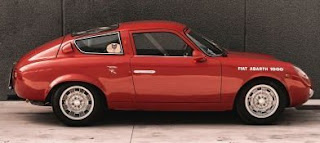
Although there was much to distinguish the 1000 Bialbero GT from the preceding 750 Zagato series in terms of body styling/construction, there were also mechanical innovations reflecting the model’s increased speed capability.  These included disc brakes and the adoption of a front-mounted coolant radiator.  Also significant was the introduction in ’62 of a five speed gearbox. 

Recently advertised/sold Abarth 1000 Bialbero GTs:

#0242 Courtesy Ruote da Sogno

#0268 Courtesy Fantasy Junction

Courtesy Supercars.net

#0286 (Longnose) Courtesy Bonhams

Tuesday, January 25, 2022

Not Just a Pretty Face

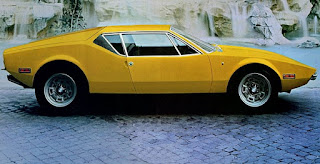
In the years 1965-66, Bob Dylan recorded 3 albums which embody one of the most astonishing streaks of sustained creative brilliance of all time.  Bringing it all Back Home, Highway 61 Revisited and Blonde on Blonde showcased thirty four tracks, not a single one less than first rate, and, astonishingly, nine are genuinely classifiable as ‘masterpieces.’  Talking about what he was striving to achieve, Dylan said: The closest I ever got to the sound I hear in my mind was on the Blonde on Blonde album.  It’s that thin, wild mercury sound.  It’s metallic and bright gold, with whatever that conjures up.  It brings to me, in a visual aesthetic analogy, the sharp – yet harmoniously integrated – angular forms that are the automobile bodies created in 1970-73 by Marcello Gandini in a mid-‘60s Dylan-like purple patch.  Limbering up in 1967-69 with sharp-lined ‘concept’ cars such as the Lamborghini Marzal and the Alfa Romeo Carabo, Gandini’s razor-like shapes appeared on the road as the Lamborghini Jarama, Urraco and Countach, Lancia Stratos HF, FIAT X1/9, Maserati Khamsin and Ferrari/Dino 308 GT4.  This substantial cadre of cars, with a shared visual mood, represents the very best of early Seventies style, except . . . there was one more such contemporary model that was not envisaged on Gandini’s drawing board.  Theoretically, perhaps, it could have taken shape on one nearby Gandini’s, since it is comprised to a considerable extent of the angular lines and forms he himself constructed so successfully.  And, somehow, its creator had also been able to incorporate – at a hinted, subtle level – some curvilinear elements that contributed to a balance of supreme litheness at the front end with a muscular heft characterising the rear quarters.  This hybrid theme extends to the product ‘package’ – Italian coachbuilding/American power unit; to marque ownership – Argentinian/Italian, and to styling authorship: Tom Tjaarda, an American, (whose father was Dutch-born), based at Carrozzeria Ghia in Turin.

Alejandro de Tomaso founded his marque in Modena in 1959.  When his focus turned from his initial interest in racing cars to sports cars for the road, De Tomaso embarked on the production of a series of GTs, culminating in the Guarà, made from 1993 to 2004, (at which date the company failed).  The Pantera model preceded the Guara, with a production run begun in 1971, of some 7,000 units.  A conventional monocoque, the Pantera was powered by a Ford 5.8 litre V8 coupled to a ZF transaxle.  Performance was quoted as 0-60 mph in 5.5 secs and a top speed of 159 mph.  Successive iterations included a GTS model with higher output engine, and a Si version late in the production run.

Early standard De Tomaso Pantera

Ford was closely involved, not only as the car’s engine supplier, but also, until 1975, with a distribution agreement which made the car available in the U.S. though the Lincoln Mercury dealer network.  This provided Ford with a ‘European’ style sports car ostensibly within its product range, serving not only as an incremental profit opportunity for its dealers, but also as a halo model to draw interest and prospective buyers to the Blue Oval brand.  And Ford, with its expertise in savvy marketing, was quick to introduce, in the GTS, a ‘premium’ version, enabling a boosted profit margin and additional performance-image charisma. 

The Pantera was not just eye candy.  Ford was enjoying the glow that its success in motor sport had generated through the late Sixties.  Four consecutive Le Mans victories, 1966-69 and the dominance in Formula One of the Ford-badged Cosworth DFV engine had done wonders for image building and marketing.  Dearborn management was keen to add to its new exotic GT’s customer appeal by ensuring that it was highly visible and achieved success on American race circuits.  As a first step, in early 1972, a Group 3-compliant version was made available.  As such, because it was a class allowing only very limited modifications, it was really just a mild upgrading of the GTS variant.  Most significant was an increase in engine power, from 330 bhp for the standard car, to 345 bhp, achieved with a higher compression ratio, better breathing and freer exhaust gas flow.  Also notable, were wider wheels, (Campagnolo alloys), 8 inch at the front, 10 inch rear.

Early Group 3 Pantera

The first batch of Group 3 Panteras were built between December 1971 and April 1972.  It is commonly given that 34 Group 3 Panteras were manufactured, but former De Tomaso director, Giorgio Montagnani, has been quoted as saying that the number was 36.  Further, he recalled that 6 of these were full ‘works’ racecars and 4 rally versions of a similar status.  The prototype, chassis #1070, was purchased in March 1972 by Auto Club Roma.  This car was raced extensively in Italy throughout the decade, by Auto Club and its subsequent owners, Ital Atlantic Express, and then Marco Curti.  Racingsportscars.com records a career of 7 years, with 19 events entered, and 3 class wins.  (This tally does not, however, include results for the initial two seasons.)


#1070 at Magione, 1974

The FIA class regulations of the time offered a greater potential for success in the Group 4 category.  This allowed for modifications to aspects of the car that constituted its weaker aspects: weight, suspension, steering and braking.  The standard engine was not such a feature, but still was the subject of upgrading, (mainly around gas flow optimisation), taking output up to around 450 bhp.  This increase in power, together with a reduction of weight by around 300kg, enabled good potential class competitiveness.  However, a set-back occurred when an unexpected revised regulation minimum weight was announced, this being some 150 kg above that achieved by development work including the use of aluminium in substitution for steel in major panels, fibreglass wing extensions, plastic ‘glass’ and stripped out interior.  A further issue arose during testing as engine reliability became a concern.  This would eventually be addressed by the adoption of lower compression values.  Various sources indicate that De Tomaso built 14 Group 4 Panteras.

At the La Sarthe event, a Claude Dubois-entered car, chassis #2860, crewed by Jean-Marie Jacquemin/Yves Deprez finished 16th, 2nd in class.  Three other Panteras were entered, two for Escuderia Montjuich, the other for Societé Franco-Brittanic, but they were all early retirements with blown cylinder head gaskets.


#2860 at Le Mans, 1972

The following month, Herbert Muller took his Pantera to a Group 4 win in the Euro GT series at Nivelles.  He followed this up in August with another victory in the Deutsche Automobil Rundstrecken Meisterschaft meeting at the Norisring.

#2859 at Nivelles, 1972

In 1973 reliability improved and in June works-entered #2873 won in Euro GT at Imola in the hands of Mike Parkes.  This was a particularly satisfying victory for De Tomaso, as Parkes had been hard at work in ’72 developing the Group 4 version of the Pantera.

#2873 at Imola, 1973

Two months later another ‘big name’ – Clay Regazzoni – took the same car to victory at the Hockenheim round.

#2873 at Hockenheim, 1973

That car certainly earned its keep that season – in October it was a winner once again, this time in the Giro d’Italia with Mario Casoni and Rafaelle Minganti at the wheel.

#2873 Giro d’Italia start, 1973

Casoni was apparently fully au-fait with the Pantera by late season, having achieved another first-place, this time in #2872, the previous month at Casale.  Other Pantera victories in 1973 included Croix-en-Ternois, by Patrick Metral, and at Varano, by Ugo Locatelli. 

1974 saw a substantial number of race entries for Panteras.  Odoardo Govoni scored 3 victories in the Spring at Magione and (twice) at Varano.  A repeat win in the Giro d’Italia was missed, but Govoni and Vincenzo Angelelli's was the best placed of 7 Panteras entered, finishing 3rd.  Four cars ran in the Targa Florio, that of Alex Pesenti-Rossi and Alvaro Valtellina being the highest finisher, in 13th.  At Le Mans, Wicky Racing Team intended to run two cars, but only that of Max Cohen-Olivar and Philippe Carron started, and was out early with timing gear failure.

Wicky Racing Team at Le Mans, 1974

Once again, in 1975, Panteras covered a great many racing miles, but no victories are on record.  Govoni was again a prominent exponent at the wheel, and he was the most successful driver, scoring 2nd places at both the September and November GT events at the Magione circuit.  Partnering Ruggero Parpinelli, he also finished 8th, (and 5th in class), at the Targa Florio.  Four cars ran at Le Mans, but only the early chassis, #2860, still run by Team Claude Dubois and now driven by Pierre Rubens and Paolo Bozzetto, made it to the finish, in 16th place, (8th in class), just as it had done in ’72.

#2873 at the Targa Florio, 1975
 

#2860 at Le Mans, 1975

No less than 10 Panteras were entered for the Giro d’Italia, with the Jolly Club car, driven by Bozzetto and Marco Martinenghi taking 5th place, (3rd in class). 

Highlights of the 1976 season were victories for Pierre Rubens (Team Willeme) at both Zolder and Colmar-Berg, four other podium positions in Europe, and three in Australia.  Although there was a greatly reduced participation at Le Mans and the Targa Florio, seven Panteras ran in the Giro d’Italia, with Govoni and Valentino Balboni finishing 6th.

#2873 Giro d’Italia, 1976

In the early stages of the 1977 season, Rene Tricot, (Team Willeme), took three victories in Belgium, while in November, Maurizio Micangeli and Carlo Pietromarchi scored a significant win in the Group 4/5 event at Vallelunga.  Four cars took part in the Giro d’Italia, Pietromarchi and Giancarlo Naddeo coming 3rd.

Carlo Pietromarchi/Giancarlo Naddeo, Giro d’Italia, 1977

For the remainder of the Seventies, Panteras continued to feature in numbers in national/European series racing, but results were mediocre, with just the occasional win/podium finish.  During the Eighties, participation fell to lower levels, with the cars being considerably less competitive.  This trend persisted in the Nineties, except that in 1995 Thorkild Thyrring was a major force for ADA Engineering in the British GT series, winning the GT1 class championship.

Thorkild Thyrring, British GT, Silverstone, 1995

Today – and in recent times – Panteras are to be seen competing with verve in Historic meetings.  Excellent video is available of the Group 4 example of Luigi Moreschi on the 2018 Vernasca Silver Flag event.  To enjoy the sight and sound of a Group 3 car running at Spa recently, have a look at this video.  A Group 4 Pantera, #2598, is currently offered for sale, having been competing with considerable success in Romania.

#2598, racing in Romania

You may have wondered why I opened this piece with an encomium to Marcello Gandini in relation to a car actually styled by rival, Tom Tjaarda.  Much as I admire Gandini’s work, I’m sorry to say that I think he despoiled Tjaarda’s masterpiece:  In 1989, Alejandro de Tomaso insisted that the job of facelifting the Pantera for 1990 be awarded to Gandini’s consultancy.  What resulted was the Si.

The main focus of the exercise was on the front end.  A ‘heavier,’ more curvy, character was conferred by redesigned/rescaled front wings and bumper.  The effect on the car’s overall form and stance was a loss of the pleasing balanced contrast between a svelte front and a burly centre/rear section.  To some eyes this may have resulted in a more consistent, cohesive design, but, as such, the Pantera’s body was no longer a physical analogy of its hybrid nature – Latin style and dynamic flair combined with American motive heft.


I have derived much information from the excellent www.racingsportscars.com.  This is an invaluable source of data for anyone researching motor sport history.  For the De Tomaso Pantera, refer here: https://www.racingsportscars.com/type/archive/De%20Tomaso/Pantera.html

Other essential resources are:

http://www.detomasoregistry.org/

http://panterainternational.org/detomaso_history/europes_pantera.html

https://detomasodc.co.uk/

https://australianmotorheritagefoundation.org/2021/08/28/the-making-of-the-de-tomaso-pantera-by-gautam-sen/