Showing posts with label GT. Show all posts

Thursday, October 27, 2022

Added Lightness . . . and Style, Milan-made

The Lancia Fulvia was in production at the Chivasso factory from 1963 to 1976.  The range included a Chivasso-built Coupe which would become renowned for its success in top flight rally competition.  However, there was another Fulvia variant, also a coupe, named ‘Sport.’  It was initially presented at the 1965 Turin Motor Show.  Styled at Zagato, (by Ercole Spada), it also was built at the Carrozzeria’s Milan factory.  It was especially distinctive in its era in being powered by a V4 engine and driving through the front axle.  The Fulvia Sport is also notable as being the last model introduced before the company’s loss of independence with Fiat’s takeover in 1969. 

This account is mainly about the Sport’s road racing record, primarily in the late 1960s/1970s – it does not cover rallying, in which the model was extensively involved, warranting a separate narrative.  A further emphasis is on activities with the Competizione version.
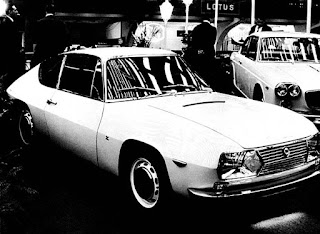
Fulvia Sport at launch, 1965 (Courtesy Carstyling.ru)
Fulvia Sport at launch, 1965 (Courtesy Carstyling.ru)

The earliest Fulvia Sports (type 818.132) had a 1216 cc engine, but any power disadvantage this capacity implied in the GT1.3 racing class was offset to some extent by the fact that the Zagato body was all-aluminium/magnesium alloy (peralluman) and had a quoted kerb weight of just 915 kg.  This version of the twin cam V4 engine was rated at 79 bhp but was capable of 87 in an HF version for the Fulvia Coupe.  In 1966 a 1298 cc power unit was substituted (types 818.332/362) and this took the Sport up to the 87/92 bhp level.  However, although the alloy bodywork was initially retained, there was a running change in production to a steel shell with alloy bonnet and doors.  These cars, naturally, were heavier, at 1005 kg. 

Of the all-alloy batch of cars, just 27 were built as Competizione versions; (this is according to the chassis list reproduced in the definitive book, Zagato Fulvia Sport Competizione, by Carlo Stella and Bruno Vettore).  Essential to the Competizione variant was a reduction of weight, and so, distinctively, all around the chassis, members and minor panels were drilled with lightening holes.

Competizione chassis, illustrating drilled lightening holes. (Courtesy Vere Lancia)

Most examples were finished in the intense orange colour, ‘Rosso San Siro,’ and featured Plexiglas side glazing.  Flared arches complemented 6J x 14” Campagnolo alloy wheels.  As with the ‘racing’ models offered by other manufacturers, detailed specification was to some extent determined by the individual customer, so degrees of engine performance uprating and chassis refinement varied quite considerably.  A power output a little over 100 bhp would not have been unusual and in a few instances substantially more was coaxed from this relatively small engine.  The Fulvia Sport was FIA homologated (reference #573) for Group 3 racing in November 1967. 

Zagato Fulvia Sport Competizione includes a table of results achieved by Sport Competiziones in the period 1968-75.  This documents a great number of wins (mostly in-class) and top-8 placings.  The majority of events covered were of national status, most of these were held in Italy and many were hill climbs/time trials.  Examples of these would be, Castell’Arquto-Vernasca; Coppa Citta di Enna (Pergusa); Coppa del Chianti; Vittoria Veneto Cansiglio (Fregona) and Coppa Bruno Carotti (Lisciano).

The results of premier national and international grade events are documented in the on-line database of Racing Sports Cars.  The first race result for a Fulvia Sport in this is for a car driven by Claudio Maglioli and Enrico Romanini to 13th place, (1st in T2.0 class), in the 1966 running of the Mugello GP, a round of the World Sportscar Championship.  The race attracted a large entry of Fulvia coupes, but Maglioli/Romanini’s appears to have been the only Sport variant.  Maglioli had been an Italian Touring Car class champion the previous year (in a Flavia Sport Zagato).  He was a key figure in the Fulvia Sport story, with involvement well beyond his role as a works driver.  Magioli’s own business was a successful tuning/preparation workshop and he collaborated closely with Cesare Fiori during the period 1963-6 when Fiori established a new Squadra Corse within the Lancia factory.  Fiori and Maglioli subsequently worked together on the project to create the F&M Special – see below in the notes for the 1969 season. 

1968

The season saw Maglioli at the wheel of a well-documented Competizione - #1911.  This was built very early in the year and immediately shipped to the U.S. for the 24 Hours of Daytona.  Together with #2450, the car has been characterised as a ‘Prototype.’  Records indicate that #1911 was originally fitted with a 1401 cc engine.  Entered by Algar Enterprises for Maglioli and Giancarlo Baghetti, the car was an early retirement from the race, lubrication-related engine failure being cited as the reason.

#1911 at Daytona, February 1968


Claudio Maglioli (right) with Giancarlo Baghetti at Daytona. (Courtesy FulviaClub.it)


The following month, #1911 fared little better at the 12 Hours of Sebring.  It did complete over a quarter of the race distance, but again was sidelined with an oil starvation engine failure.

Claudio Maglioli with #1911 at Sebring, 1968. (Courtesy FulviaClub.it)

Although in these season-opening events #1911 had been a lone pioneer in the U.S., at April’s Targa Florio there were no fewer than ten Sports, (two Prototypes and eight Competiziones), running in the race and endeavouring to stay out of trouble on the hazard strewn Sicilian roads.  And, by enlarge, they did pretty well.  Best was the factory Squadra Corse Prototype, #1911, (misreported as #1238 in some resources), in the hands of Sandro Munari and Raffaele Pinto which finished 11th, 7th in the P2.0 class; (bear in mind that it was giving away 599 cc in terms of the class capacity limit.)

Munari/Pinto, Squadra Corse HF Lancia, 11th overall

Jolly Club was a racing team which frequently fielded Lancia cars in both circuit racing and rallying.  It had been founded in Milan in 1957 and by the late 60s/70s was active internationally.  In period, the Club’s cars were often run in a distinctive light blue with a pair of yellow stripes on the bonnet; (an example of this can be seen in the Present Day section of this article).  Alternatively, blue bonnet stripes on the standard Rosso San Siro was sometimes favoured.  Three Jolly Club-entered Sports figured in the race’s results.  Best of these was the example driven by Giuseppe Giacomini and Sergio Barbasio, finishing not far behind Munari, in 14th.  However, importantly, this car did not have the larger engine and was run in the GT1.3 class, of which it was the winner.

Giacomini/Barbasio, Jolly Club, 1st GT1.3 Class


A second factory Prototype, #2290, was driven by Claudio Maglioli and Marco Crosina to 15th place overall.  The ‘flimsiness’ of these extensively lightened versions is evident in the photograph below.

Maglioli/Crosina, second works Prototype, 15th overall. (Courtesy FulviaClub.it)

One Sport which did not stay out of trouble on the Madonie circuit was that of two drivers with inscrutable pseudonyms – Snoopy and Nano.  Although their car appears in the photograph below to be well off into the boonies, it was successfully relocated to the road and finished the race in 31st place.

‘Snoopy’s’ Sport being recovered

These two ran in close company - #12 driven by Zefferini Filippi and Giorgio Danieli, and #18, Maurizio Zanetti and Pietro Corbellini:

Filippi/Danieli lead Zanetti/Corbellini

A factory Squadra Corse Sport was run at the Mugello Grand Prix two months later for Magioli and Munari, but the outcome for this has not been found up to now.  However, in the similar event, the Coppa Citta di Enna, in August, Matteo Sgarlata is recorded as having headed a 1-2-3-4 of Sports, ahead of a small field including Alfas, a Fiat and an Alpine. 

1969

Once again, chassis #1911 contested the early season U.S. races and the entries were handled by Algar EnterprisesAlgar (an abbreviation of proprietor, Al Garthwaite’s, name) was a business developed from the Rosemont-based automotive bodybuilder, Derham’s, into a successful and still-active dealership now trading as Ferrari Philadelphia.  At Daytona, Magioli/Pinto brought their car home in 11th place overall, winning the P2.0 class.

Claudio Magioli (right) with Raffaele Pinto at Daytona. (Courtesy FulviaClub.it)


Maglioli/Pinto winning the P2.0 class. (Courtesy adrenaline24h.com)

At Sebring, the same pairing finished 18th, 4th in the P2.0 class.  Headed in class only by two Porsche 906s and a Dino 206, this was another strong endurance performance.

Emmebi 1/43 scale model of Magioli/Pinto’s Sport as run at Sebring.  (Courtesy emmebimodels.it)


Jolly Club was the entrant of two Sports at the Monza 1000 kms in April 1969.  Although one of these failed to finish, that driven by Luigi Cabella and Giovanni Marini won the GT1.3 class, finishing 18th overall.  Another Sport, of Eugenio Foschetti, came in 20th, second in class.

Jolly Club was again much involved in the following month’s 53rd running of the Targa Florio.  Competizione cars were run for Tony Fall and Alberto Ruiz-Gimenez, 18th overall and GT1.3 class winners, and for Cabella and Marini (41st).  A third, #1289, was entered by the Club for Cesare Poretti and Fiorenzo Genta, and this took 23rd place, 3rd in class; (see also the Present Day section later in this article).  A Scuderia Pegaso- run Competizione was shared by Raffaele Restivo and Alfonso Merendino (20th).  The only Competizione not classified was that of Angelo Rizzo and Gianni Arcovito. 

‘Standard’ Sports also classified were: Franco Lisitano and Matteo Calabrò, (30th); Girolamo Capra and Angelo Lepri, (47th).

Emmebi 1/43 scale model of the class-winning Competizione of Fall/Ruiz-Gimenez. (Courtesy emmebimodels.it)


Competizione of Restivo/Merendino, 2nd in class


Jolly Club Competizione of Cabella/Marini, classified 41st, but affected by a fire.

Scuderia Palladio was a racing club founded in 1964 in Vicenza.  The spirit of the team was characterised by its affectionately-regarded logo:


The Scuderia entered a number of drivers into a range of Italian and International circuit events and rallies.  It was responsible for the lone Sport, #1340, run in June at the Nurburgring’s 1000 kms.  Crewed by Girolama Capra and Angelino Lepri, it managed 8th in the GT2.0 class.  Once again, the result for such a 1401 cc-engined example should be seen in the context of the disadvantage conferred by classification as a Group 3 car with a 2000 cc capacity limit.  (This particular Competizione also features in the Present Day section later in this article).

Scuderia Palladio drivers Capra/Lepri, 8th in class at the Nurburgring

By this stage of the season, the Factory Squadra Corse had become in the habit of using the Fulvia F & M Special in events where previously it might have deployed the Prototype Sports.  F & M was an abbreviation of the model’s joint developers, Cesare Fiorio and Claudio Maglioli.  It was a Factory Fulvia Coupe converted to a lightweight (720 kgs) open barchetta powered by a 1600 cc, 160 bhp version of the V4 engine.  The effectiveness of this concept was demonstrated at the Nurburgring by the two F&M Specials placing first and second in the P1.6 class. 

The next relevant major event was the Mugello GP.  At the front of the field this race saw a great selection of some of the most charismatic Sports Cars of the era – Abarth 2000SP, Lola T70, Porsche 906. Alfa Romeo T33/2 and Alfa Giulia GTA.  However, it was also a race which featured a strong Fulvia Sport performance, with a GT1.3 class 1-2-3-4-5 result.  This was headed by the Jolly Club pairing of Germano Nataloni and Francesco Morelli.  With all five entered Sports finishing, the model’s improved reliability was evidenced. 

1970

There continued to be no class provision in the International Championship for Makes for capacities considerably smaller than 2000 cc.  With the competitive disadvantage this conferred on relevant Lancia Sports/GT models and given results in previous seasons, there was no incentive for European teams to journey to the U.S. for the opening races at Daytona and Sebring.  No Fulvia Sports ran at either event in 1970. 

At the Targa Florio, a Jolly Club Sport driven by Franco Lisitano and Giuseppe Pirrone managed a mid-field finish, 3rd in the GT1.3 class.  Of the other five Sports which raced in Sicily, two filled the next two class places and three failed to finish.  In the results database two of the cars are recorded specifically as Competizione examples - #282 (Jolly Club) and #292 which was run by Palermo-based Scuderia Pegaso, (founded 1961).

Jolly Club drivers Lisitano/Pirrone (“Ramon”/”Zerimar”) 3rd in GT1.3 class at the Targa Florio


Another Jolly Club car – driven to 5th in class  at the Targa Florio.  © www.schlegelmilch.com.

Scuderia Pegaso #292 of Mantia/Lo Jacono, 4th in class; Scuderia’s logo, right

The Coppa Inter-Europa was run in September at Monza.  Jolly Club entered three Sports and another car was entered and driven by Amedeo Donzelli.  Aldo Frisiani achieved a 2nd in class placing for Jolly Club, whilst Donzelli was 3rd. 

1971

By this season the further development of the Factory-built Fulvia Coupe was demonstrated by the entries for the Targa Florio.  The model had been significantly updated generally in 1970, (designated Series 2), and the model’s potential in competition was further enhanced by availability of a 1584 cc version of the engine, first seen in the Series 1 Rallye HF model of 1969, (also known by its nickname, Fanalone).  The Series 2 1600 HF boasted 113 bhp and was an excellent base for a racing car.  The Sport, however, did not benefit from the 1584 cc engine until the following year.  Reflecting these points, The Fulvia versions taking part in Sicily this time were, HF 1600 Coupe – six; 1300 Coupe – four, Sport 1300/Competizione – two.  Best result for a Sport was for the car driven by Raffaele Restivo and Alfonso Merendino, GT1.3 class winner.  The focus on the utilisation of the Coupe HF 1600 was emphasised by the fact that the two Squadra Corse entries were both with that model, though both failed to finish.

Class winning Jolly Club Sport Competizione of Restivo/Merendino. Courtesy Francesco Terranova

1972

Once again, just two Sports were to be seen in the Targa Florio.  The Competizione driven by Franco Lisitano and Toti Fenga finished 28th, 3rd in the S1.3 class.

Third in class on the Targa Florio for the Competizione of Lisitano/Fenga

Elsewhere by now, most utilisation of Sports was confined to more minor events of national or regional status only.  Meanwhile, the Lancia marque was mainly being represented at the higher levels of competition on-track by the HF Coupes.

1973

This was the last year in which the Targa Florio was an international event with the results counting towards the World Championship.  Just one Sport ran, driven by Giovanni Martino and Ugo Locatelli – it failed to finish.

‘Jolly Joker,’ #182 of Martino/Locatelli – DNF on the Targa Florio


1/43 scale model of #182

This year saw the debut of the Stratos model which was soon re-establishing Lancia’s elite grade motor sport credentials.  The model scored a 2nd overall result in the Targa Florio and a victory later in the season in the Tour de France.

Present Day

Looking at some examples of Sports retailed/auctioned over the last decade, the following observations can be made about the present day value of the model: 

Reflecting the rarity of the Competizione variant, a figure of £175,000-£200,000 is realistic.  This would be for a car properly restored with reasonable originality of specification and on the Stella/Vettore list of 27 ‘real’ Competizione chassis numbers.  These are all 1300 cc cars.   

Whilst it is possible to find a complete/running 1300 Series 1 for less than £20,000, such an early car in good order is likely to command £40-50,000. 

1600 examples, typically make £35-£40,000. 

‘Competizione tribute’ cars tend to be advertised with a £50,000+ price tag.


In 2016 in Milan, at the spectacular Duemila Ruote auction, the Competizione #1340 was sold by RM Sotheby’s for €162,400.  This was the very first Competizione road-registered, (on 15th May 1967), while the property of Carrozzeria La Zagato.  Also distinctive was this being the first Competizione painted in the San Siro Red hue which became de rigueur for the model.  And, as already mentioned above in the account of racing in 1969, it ran well in that year’s Nurburgring 1000 kms; (the previous year it had finished 4th in class at the Targa Florio, driven by Zeffirino Flippi and Giorgio Danieli).


#1340 racing in-period Courtesy Fulvia Sport Zagato (Facebook)

As sold in 2016, the original 818.302 engine had been replaced by an 818.342 Group 4 specification unit.  The gearbox also had been updated – a 5 speed now in place of the original 4 speed.

#1340 photographed for the Duemila Ruote sale catalogue


Sicily’s capital, Palermo, has in recent years been the venue for an event known as the Monte Pellegrino Rievocazione Storica.  It is characterised as, ‘not a speed race, but a “dynamic competition of elegance.”’  At the 2014 staging, another early Competizione was prominent - #1289.  This was the second Competizione built and was registered in January 1968, to owner, Fiorenzo Genta.  It was one of several cars than ran under the Jolly Club banner with its first event being the Monte Carlo Rally.  Later that season it sustained extensive and very serious damage requiring a major rebuild.  It emerged however in good shape for the following season, firstly, as referenced above, when Genta, partnered by Cesare Poretti, took it to 3rd in the GT1.3 class in the Targa Florio.  There followed an excellent string of circuit-racing finishes, as a result of which Genta was crowned champion of the 1.3 class of the Italian GT Championship. 

It was originally painted in Montello Amaranth – a deep red hue.  However, when rebuilt in late 1968 it was repainted in white, with blue bonnet stripes, as seen in the 2014 photographs below:

#1289 as seen on the Monte Pellegrino Rievocazione Storica in 2014

Of the two Squadra Corse Prototypes, #1911 no longer exists – it was scrapped following damage sustained when it was in use for autocross racing, (date unknown).  However, the sister Prototype #2290, came into the ownership of Gloria Nai, (daughter of a Lancia dealer), in 1969.  More recently the car has been photographed and its good state of preservation is very evident:


#2290 Prototype in Gloria Nai’s ownership

In period, Sports proved highly competitive in hill-climbing.  Today, this form of motor sport is popular on the Historics scene.  At one such event, the Vittorio Veneto-Cansiglio, #1890 is seen in action below.  This is the Competizione owned by the Carlo Stella, seen I would guess, around the turn of the millennium.

#1890 hill-climbing

Stella documented #1890 extensively in his book.  He said about it, ‘The many races in which this car competed and with over 30 victories to its credit in its almost eight years of racing make 001890 one of the Fulvias with the most prestigious racing pedigrees.’  In its first year of competition it was mainly driven by Ugo Locatelli for whom it was bought by Jolly Club.  Stella lists seven class victories in 1968 for Locatelli in #1890.  At that time the car would have looked a little different, with numerous decals and stickers, notably script stickers advertising Jolly Club.  Apparently, this ‘look’ was re-created more recently, as evidenced by the photograph below.  This shows designer, Ercole Spada of Zagato, alongside the car at a Lancia History day in 2016.


Ercole Spada with #1890. Courtesy Fulvia Sport Zagato (Facebook)


Competizione #1903 was purchased new by Guido Caffi and he raced it successfully in both the 1968 and 1969 seasons.  Though he sold it in the Seventies, he bought it back in 1996 and took up running it in Historic events.  The car is seen below on the Rechberg Hill Climb in 2009:

Guido Belli in #1903, Rechberg, 2009. Courtesy Roman Crejci

Here, in 2021, it is on the Vernasca Silver Flag:

#1903 Courtesy Top Classico

The Silver Flag has in recent years been an excellent event on which to see Competiziones.  Here is another example – #1901 - (courtesy of the Vernasca Silver Flag Official Group, (Facebook):

#1901 – one of the two cars purchased by Jolly Club in January 1968.  Here on the 2015 Silver Flag


#1907 was originally owned by Luigi Macciocca whose Rome workshop became renowned for expertise in preparing Sports.  The car was campaigned in 1970/1 by Bruno Ripani, achieving five significant national class victories.  It is seen below in 2017 and 2022: 

#1907 in 2017. Courtesy Frans Verschuren

#1907 on Vernasca Silver Flag, 2022

Another Competizione associated with Macciocca is #1904.  It was raced by Stefano Salvi in 1968/9/70.  According to Stella/Vettore, it took a class win at Mugello in the 1968 Grand Prix there.  However, the Racing Sports Cars database records the car as a DNA at that event.  I suspect that it did ‘arrive,’ but was unable to start the race having been damaged in practice – see photograph below:

#1904 at Mugello, July 1968. (Courtesy Archivio Actualfoto Bologna)

In May 2021 Speedholics posted an article written by Michele Di Mauro about this car’s history and its recent restoration by Roberto Ratto.  As can be seen in the photograph below, the damage to that front wing has been more than made good!

#1904 today. Courtesy Alessandro Barteletti

Stella/Vettore’s list of Competiziones includes three chassis numbers for type 818.362 cars.  These were drawn from early in that run, when all of the bodywork was still in alloy.  The engine for an 818.362 was ‘S’ specification – still 1298 cc, but with an increased – to 92 bhp – power output.  Stella observes: 

Fulvia Sport 1.3 S manufacture began in 1969 and the number of this series started from the top again with 001001 and, not long afterwards – probably at the request of private owners – another small lot of Fulvia Competiziones were produced with all-peralluman bodies, but on 1300 S mechanical components.

No chassis in this Competizione production run on 1300 S mechanics was ever photographed in a race or appeared in copious race data of the period.  It is, therefore, reasonable to suppose that this was a production run to meet the demands of enthusiasts of the period, who wanted to own a road car with a body entirely in peralluman and that was as much like the Competizione as possible, but with 1300 mechanics that competed in long distance and other races of the period.  Obviously, these Competizione belong to the 1.3 S Type 818.362 series and not Type 818.332 like almost all the others. 

One of these, #1277, was sold in 2020 by the French auction house, Osenat.  It made €49,200.  Auction catalogue photographs are shown below:

#1277 Courtesy Osenat Auctioneers


As I would hope the foregoing demonstrates, the Fulvia Sport is a characterful example of Zagato style and body/chassis construction expertise.  Allied with the well-proven Lancia powertrain/steering/suspension elements, it constituted a successful racing GT.  It’s just a shame that it was not made in greater numbers, allowing it to be more accessible today for people wanting to own an aesthetically and functionally appealing example of 1960s Italian sports car manufacturing at its best.


Tuesday, January 25, 2022

Not Just a Pretty Face

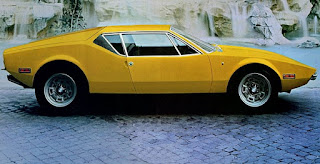
In the years 1965-66, Bob Dylan recorded 3 albums which embody one of the most astonishing streaks of sustained creative brilliance of all time.  Bringing it all Back Home, Highway 61 Revisited and Blonde on Blonde showcased thirty four tracks, not a single one less than first rate, and, astonishingly, nine are genuinely classifiable as ‘masterpieces.’  Talking about what he was striving to achieve, Dylan said: The closest I ever got to the sound I hear in my mind was on the Blonde on Blonde album.  It’s that thin, wild mercury sound.  It’s metallic and bright gold, with whatever that conjures up.  It brings to me, in a visual aesthetic analogy, the sharp – yet harmoniously integrated – angular forms that are the automobile bodies created in 1970-73 by Marcello Gandini in a mid-‘60s Dylan-like purple patch.  Limbering up in 1967-69 with sharp-lined ‘concept’ cars such as the Lamborghini Marzal and the Alfa Romeo Carabo, Gandini’s razor-like shapes appeared on the road as the Lamborghini Jarama, Urraco and Countach, Lancia Stratos HF, FIAT X1/9, Maserati Khamsin and Ferrari/Dino 308 GT4.  This substantial cadre of cars, with a shared visual mood, represents the very best of early Seventies style, except . . . there was one more such contemporary model that was not envisaged on Gandini’s drawing board.  Theoretically, perhaps, it could have taken shape on one nearby Gandini’s, since it is comprised to a considerable extent of the angular lines and forms he himself constructed so successfully.  And, somehow, its creator had also been able to incorporate – at a hinted, subtle level – some curvilinear elements that contributed to a balance of supreme litheness at the front end with a muscular heft characterising the rear quarters.  This hybrid theme extends to the product ‘package’ – Italian coachbuilding/American power unit; to marque ownership – Argentinian/Italian, and to styling authorship: Tom Tjaarda, an American, (whose father was Dutch-born), based at Carrozzeria Ghia in Turin.

Alejandro de Tomaso founded his marque in Modena in 1959.  When his focus turned from his initial interest in racing cars to sports cars for the road, De Tomaso embarked on the production of a series of GTs, culminating in the Guarà, made from 1993 to 2004, (at which date the company failed).  The Pantera model preceded the Guara, with a production run begun in 1971, of some 7,000 units.  A conventional monocoque, the Pantera was powered by a Ford 5.8 litre V8 coupled to a ZF transaxle.  Performance was quoted as 0-60 mph in 5.5 secs and a top speed of 159 mph.  Successive iterations included a GTS model with higher output engine, and a Si version late in the production run.

Early standard De Tomaso Pantera

Ford was closely involved, not only as the car’s engine supplier, but also, until 1975, with a distribution agreement which made the car available in the U.S. though the Lincoln Mercury dealer network.  This provided Ford with a ‘European’ style sports car ostensibly within its product range, serving not only as an incremental profit opportunity for its dealers, but also as a halo model to draw interest and prospective buyers to the Blue Oval brand.  And Ford, with its expertise in savvy marketing, was quick to introduce, in the GTS, a ‘premium’ version, enabling a boosted profit margin and additional performance-image charisma. 

The Pantera was not just eye candy.  Ford was enjoying the glow that its success in motor sport had generated through the late Sixties.  Four consecutive Le Mans victories, 1966-69 and the dominance in Formula One of the Ford-badged Cosworth DFV engine had done wonders for image building and marketing.  Dearborn management was keen to add to its new exotic GT’s customer appeal by ensuring that it was highly visible and achieved success on American race circuits.  As a first step, in early 1972, a Group 3-compliant version was made available.  As such, because it was a class allowing only very limited modifications, it was really just a mild upgrading of the GTS variant.  Most significant was an increase in engine power, from 330 bhp for the standard car, to 345 bhp, achieved with a higher compression ratio, better breathing and freer exhaust gas flow.  Also notable, were wider wheels, (Campagnolo alloys), 8 inch at the front, 10 inch rear.

Early Group 3 Pantera

The first batch of Group 3 Panteras were built between December 1971 and April 1972.  It is commonly given that 34 Group 3 Panteras were manufactured, but former De Tomaso director, Giorgio Montagnani, has been quoted as saying that the number was 36.  Further, he recalled that 6 of these were full ‘works’ racecars and 4 rally versions of a similar status.  The prototype, chassis #1070, was purchased in March 1972 by Auto Club Roma.  This car was raced extensively in Italy throughout the decade, by Auto Club and its subsequent owners, Ital Atlantic Express, and then Marco Curti.  Racingsportscars.com records a career of 7 years, with 19 events entered, and 3 class wins.  (This tally does not, however, include results for the initial two seasons.)


#1070 at Magione, 1974

The FIA class regulations of the time offered a greater potential for success in the Group 4 category.  This allowed for modifications to aspects of the car that constituted its weaker aspects: weight, suspension, steering and braking.  The standard engine was not such a feature, but still was the subject of upgrading, (mainly around gas flow optimisation), taking output up to around 450 bhp.  This increase in power, together with a reduction of weight by around 300kg, enabled good potential class competitiveness.  However, a set-back occurred when an unexpected revised regulation minimum weight was announced, this being some 150 kg above that achieved by development work including the use of aluminium in substitution for steel in major panels, fibreglass wing extensions, plastic ‘glass’ and stripped out interior.  A further issue arose during testing as engine reliability became a concern.  This would eventually be addressed by the adoption of lower compression values.  Various sources indicate that De Tomaso built 14 Group 4 Panteras.

At the La Sarthe event, a Claude Dubois-entered car, chassis #2860, crewed by Jean-Marie Jacquemin/Yves Deprez finished 16th, 2nd in class.  Three other Panteras were entered, two for Escuderia Montjuich, the other for Societé Franco-Brittanic, but they were all early retirements with blown cylinder head gaskets.


#2860 at Le Mans, 1972

The following month, Herbert Muller took his Pantera to a Group 4 win in the Euro GT series at Nivelles.  He followed this up in August with another victory in the Deutsche Automobil Rundstrecken Meisterschaft meeting at the Norisring.

#2859 at Nivelles, 1972

In 1973 reliability improved and in June works-entered #2873 won in Euro GT at Imola in the hands of Mike Parkes.  This was a particularly satisfying victory for De Tomaso, as Parkes had been hard at work in ’72 developing the Group 4 version of the Pantera.

#2873 at Imola, 1973

Two months later another ‘big name’ – Clay Regazzoni – took the same car to victory at the Hockenheim round.

#2873 at Hockenheim, 1973

That car certainly earned its keep that season – in October it was a winner once again, this time in the Giro d’Italia with Mario Casoni and Rafaelle Minganti at the wheel.

#2873 Giro d’Italia start, 1973

Casoni was apparently fully au-fait with the Pantera by late season, having achieved another first-place, this time in #2872, the previous month at Casale.  Other Pantera victories in 1973 included Croix-en-Ternois, by Patrick Metral, and at Varano, by Ugo Locatelli. 

1974 saw a substantial number of race entries for Panteras.  Odoardo Govoni scored 3 victories in the Spring at Magione and (twice) at Varano.  A repeat win in the Giro d’Italia was missed, but Govoni and Vincenzo Angelelli's was the best placed of 7 Panteras entered, finishing 3rd.  Four cars ran in the Targa Florio, that of Alex Pesenti-Rossi and Alvaro Valtellina being the highest finisher, in 13th.  At Le Mans, Wicky Racing Team intended to run two cars, but only that of Max Cohen-Olivar and Philippe Carron started, and was out early with timing gear failure.

Wicky Racing Team at Le Mans, 1974

Once again, in 1975, Panteras covered a great many racing miles, but no victories are on record.  Govoni was again a prominent exponent at the wheel, and he was the most successful driver, scoring 2nd places at both the September and November GT events at the Magione circuit.  Partnering Ruggero Parpinelli, he also finished 8th, (and 5th in class), at the Targa Florio.  Four cars ran at Le Mans, but only the early chassis, #2860, still run by Team Claude Dubois and now driven by Pierre Rubens and Paolo Bozzetto, made it to the finish, in 16th place, (8th in class), just as it had done in ’72.

#2873 at the Targa Florio, 1975
 

#2860 at Le Mans, 1975

No less than 10 Panteras were entered for the Giro d’Italia, with the Jolly Club car, driven by Bozzetto and Marco Martinenghi taking 5th place, (3rd in class). 

Highlights of the 1976 season were victories for Pierre Rubens (Team Willeme) at both Zolder and Colmar-Berg, four other podium positions in Europe, and three in Australia.  Although there was a greatly reduced participation at Le Mans and the Targa Florio, seven Panteras ran in the Giro d’Italia, with Govoni and Valentino Balboni finishing 6th.

#2873 Giro d’Italia, 1976

In the early stages of the 1977 season, Rene Tricot, (Team Willeme), took three victories in Belgium, while in November, Maurizio Micangeli and Carlo Pietromarchi scored a significant win in the Group 4/5 event at Vallelunga.  Four cars took part in the Giro d’Italia, Pietromarchi and Giancarlo Naddeo coming 3rd.

Carlo Pietromarchi/Giancarlo Naddeo, Giro d’Italia, 1977

For the remainder of the Seventies, Panteras continued to feature in numbers in national/European series racing, but results were mediocre, with just the occasional win/podium finish.  During the Eighties, participation fell to lower levels, with the cars being considerably less competitive.  This trend persisted in the Nineties, except that in 1995 Thorkild Thyrring was a major force for ADA Engineering in the British GT series, winning the GT1 class championship.

Thorkild Thyrring, British GT, Silverstone, 1995

Today – and in recent times – Panteras are to be seen competing with verve in Historic meetings.  Excellent video is available of the Group 4 example of Luigi Moreschi on the 2018 Vernasca Silver Flag event.  To enjoy the sight and sound of a Group 3 car running at Spa recently, have a look at this video.  A Group 4 Pantera, #2598, is currently offered for sale, having been competing with considerable success in Romania.

#2598, racing in Romania

You may have wondered why I opened this piece with an encomium to Marcello Gandini in relation to a car actually styled by rival, Tom Tjaarda.  Much as I admire Gandini’s work, I’m sorry to say that I think he despoiled Tjaarda’s masterpiece:  In 1989, Alejandro de Tomaso insisted that the job of facelifting the Pantera for 1990 be awarded to Gandini’s consultancy.  What resulted was the Si.

The main focus of the exercise was on the front end.  A ‘heavier,’ more curvy, character was conferred by redesigned/rescaled front wings and bumper.  The effect on the car’s overall form and stance was a loss of the pleasing balanced contrast between a svelte front and a burly centre/rear section.  To some eyes this may have resulted in a more consistent, cohesive design, but, as such, the Pantera’s body was no longer a physical analogy of its hybrid nature – Latin style and dynamic flair combined with American motive heft.


I have derived much information from the excellent www.racingsportscars.com.  This is an invaluable source of data for anyone researching motor sport history.  For the De Tomaso Pantera, refer here: https://www.racingsportscars.com/type/archive/De%20Tomaso/Pantera.html

Other essential resources are:

http://www.detomasoregistry.org/

http://panterainternational.org/detomaso_history/europes_pantera.html

https://detomasodc.co.uk/

https://australianmotorheritagefoundation.org/2021/08/28/the-making-of-the-de-tomaso-pantera-by-gautam-sen/