Showing posts with label Jolly Club. Show all posts

Friday, April 7, 2023

The Versatile Giorgio Pianta

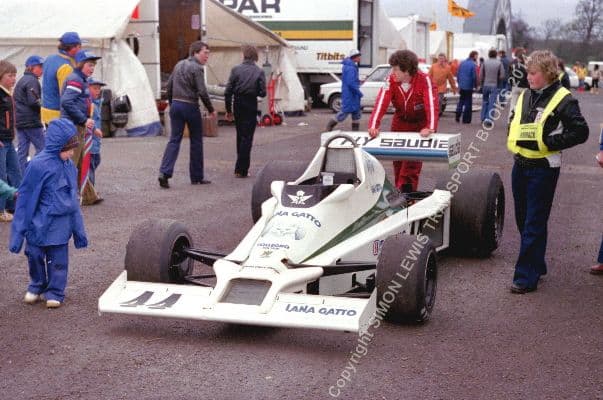
Today the general perception that Formula One is the be-all and end-all of motorsport is more marked than ever, with recent other-category innovations having failed to really grab headlines.  Formula E does not command very much interest and Sportscars/Prototypes in the hybrid era have failed to impress, having none of the aesthetic/technical/competitive charisma that we saw in the eras of Jaguar and Aston Martin at Le Mans, Ford vs. Ferrari in the 60s, 917 vs.512, 956 vs. Lancia and Sauber in Group C.  At the same time, ‘junior’ formulae such as F3 now lack pizazz, being spec formulas, with little of interest in technical developments/differing car capabilities.  So, from a contemporary perspective, we would expect that a F1 seat would necessarily represent the pinnacle of any driver’s career.  On that basis, I’m showing below the Williams FW06 that Giorgio Pianta piloted in 1979:

And although Pianta scored an excellent 5th place at Nogaro in that car, his career highlights can be chosen, mixed and matched, from this more than impressive list: 1965 Italian Rally Trophy; 1966/67 European Touring Car Championship campaigns with Squadra Corse Lancia and Porsche; team ETCC driver with Autodelta, 1968/69; class winner of the Italian Touring Car Championship, 1971/72 and developed the 1971 Targa Florio class winner for Conrero; 3rd in an Osella in the Targa Florio in 1977; developed the Fiat Abarth 124 Rally and X1/9 competition models; 1986-96, manager of Alfa Romeo Corse, in which period the Marque achieved many wins in Touring Car racing, including a spell of domination in the DTM; subsequently returned to Fiat to take charge of Fiat Auto Corse.  During his main driving career, Pianta took part in around 700 race events, winning three Italian National Championships.  This article is focused on Pianta’s circuit racing activities/career – he also saw much achievement in the realms of rallying, not covered here, but well documented elsewhere. 

The earliest regulated motorsport participation recorded for Giorgio was a drive in the Mille Miglia in 1953.  Pianta was at that time 18 years old.  He shared the wheel of an Alfa Romeo 1900 Ti with Piero Palmieri, but they failed to finish. 

An outing at Monza five years later saw him competing in a GT Cup race organised by the renowned Sant Ambroeus scuderia.  Giorgio is seen below in his Fiat 500.


Nowadays, the importance of networking is emphasised to people beginning their commercial career, as if a recently invented ‘science.’  Yet, over sixty years ago, Giorgio was proving himself a natural, effective practitioner.  He managed to arrange for himself a co-drive with the son of Ferrari’s Eugenio Dragoni in an Abarth 1000 TC.  Exploits in this car attracted the attention of Sandro Fiorio, PRO for Lancia.  This turned out to be an especially rewarding contact, as Sando’s son, Cesare, was responsible for the Lancia HF Squadra Corse.  Thus, in 1963, Giorgio found himself with a ‘works’ Lancia drive.  As a result, he was soon at the wheel of such cars as the Flaminia Sport, as seen below at Monza:


Giorgio also remained associated with the Scuderia Sant Ambroeus for several years, driving various of its cars, for instance: Ferrari 250 GT SWB in 1962, Alfa Romeo TZ in 1964 and the arcane ASA RB 613 in 1965’s Targa Florio.  Partnering Giorgio Bassi, a 3rd in class resulted.  The car is seen below:

Courtesy of Vittorio Giordano

1966 saw Pianta co-driving with Lancia rallying star, Sandro Munari, at the Nurburgring 500, where they took their Flavia Sport Zagato to 4th in Division 3 of the Touring Car class:

Courtesy of H-J Roegler

The following season was a notably successful one for Pianta in touring cars, this time in a Division 3 Scuderia Sant Ambroeus 2.0 Porsche 911.  Best results of the year were the outright victory in Belgrade, and a class win in Budapest. 

By early 1968, his recent performances in touring cars had impressed Carlo Chiti enough for him to recruit Giorgio to the Autodelta driving contingent.  Pianta soon repaid Chiti’s confidence with a Division 2 class win at Monza in a Giulia Sprint GTA 1600, co-driven by Teodoro Zeccoli.  For Le Mans that year, Pianta was back with Scuderia Sant Ambroeous, entrusted in company with Enrico Pinto with the team’s Iso Rivolta.  But the car was accident damaged in practice and thus failed to make the start.

The Sant Ambroeus Iso Rivolta for Pianta/Pinto, Le Mans, 1968

Giorgio rounded off the Sixties with drives of increased diversity, both in terms of entrants and types of car – BMW 2002 Ti – Porsche 910 – Lancia Fulvia HF;  Escuderia Nacional CS – Ecurie Nat. Espagnole.  Another ‘new’ employer coming to note in 1970 was Monzeglio Corse, which entered an AMS-Alfa for the Targa Florio to be driven by Giorgio and Mario Zanetti.  And they made a good job of it: winners of the P 1.3 class.

Left: In the Targa Florio pits, (Schlegemilch). Right: Courtesy of John Phillips

Virgilio Conrero was a significant personality on the Turin automotive scene, especially so in the Fifties/Sixties when he was closely associated with Alfa Romeo.  For engine tuning and modifications requested by customers and motor sport Alfisti, Conrero fulfilled the role eventually performed by Autodelta when set-up as a factory ‘extension.’  In fact, the establishment of Autodelta and thus a loss of business volume, led Conrero to branch out into enhancement developments for other makes and to step up his focus on Renault engines, which had been a secondary interest during the period of concentration on Alfa Romeo.  But perhaps the most important new involvement was with the Opel brand.  A major strand of this was an agreement with General Motors to utilise his Conrero Squadra Corse to run Opel products on-track.  The project was facilitated by the efforts of Romano Artioli, leading dealer for Opel in Italy.  He maintained a steadfast optimism that the GT model could be made an effective Group 4 racer and persuaded Conrero to commit to its development, whilst he also managed to raise necessary funds from his fellow Opel dealers.  Eventually, this enabled chassis improvements to be made and an engine output of near 200 bhp achieved – impressive, considering that the standard production version boasted just 88 bhp.  Conrero took Pianta on to play a lead role in this work, drawing on Giorgio’s extensive experience in developing cars for competition.  It proved to be a very successful arrangement, with Pianta becoming the large engine class winner in a 3.0 Opel Commodore of the Italian Touring Car Championship in both 1971/72.  At the same time, he oversaw modifications to, and the preparation of, four Opel GT 1900s for the 1971 Targa Florio.  Against tough opposition – especially numerous Porsche 911s - the example driven by Paolo Monti and Salvatore Calascibetta achieved an excellent 9th overall, first in class finish.  Pianta also co-drove, with Pino Pica, but his Opel was forced to retire on the fourth lap.  Also failing to finish was the similar car of Giuseppe Marotta and Gianpaolo Benedini.

1971 Targa Florio. Left: Marotta/Benedini, courtesy Sergio Tino; 
Centre: Pianta/Pica, courtesy Maurice Van Sevecotte; Right: Monti/Calascibetta, ©Schlegemilch

Conrero mounted a similar effort for the 1972 Targa.  Further development had resulted in a new cylinder head, enabling an increased power output of over 200 bhp.  Of the three GTs entered, two were carburettor-equipped, whilst that to be driven by Pianta and Giorgio Schön featured Kügelfischer mechanical fuel injection, and this enabled a further power increase, to 214 bhp.  This was enough for Pianta to be able to post a 2000 cc class fastest time in practice, significantly below what the Porsche competition was managing.  However after an enforced power unit change, the engine could not be fired-up for the start of the race.

1972 Targa Florio. Pianta/Schön in practice. Courtesy Revs Institute

Giorgio reverted to his 1971 partner, Pino Pica, for the 1973 event.  On this occasion they were flying the Conrero colours on a sports racing car which had been created in 1972 for Momo proprietor, Giampiero Moretti.  The car’s designer was Giorgio Valentini, (also known for designing the BWA single seaters, Bertone Panther, Mystère prototype and Osella FA1C).  Valenti began work on the design in September 1971.  Moretti had requested several innovations, in particular in the suspension and steering layout/operation and inboard brakes.  It was a super-light-weight chassis – the frame being just 55 kgs – with a quick-change, transverse fuel tank.  As initially raced by Moretti/Corrado Manfredini at the 500 kms of Interlagos in 1972, the car was powered by a 265 bhp Abarth-Osella 2.0, but, as taken over by Conrero, it was fitted with an Opel unit as was used in the racing GT 1900s.  But, once again, Pianta suffered the disappointment of a race non-finish, the car being retired after 4 laps.

Conrero-Opel on 1973 Targa Florio (Pica driving)

Also in 1973, Giorgio raced a Lola T280-Ford DFV for Jolly Club at three major events.  Again partnering Pino Pica, a 7th place finish was achieved at the Dijon 1000 kms.  The pair were together once more for the Monza 1000 kms but were out before quarter distance due to a failed coolant hose.  Further disappointment followed at the Nurburgring 1000 kms for Giorgio and co-drivers, Mario Casoni and Manfred Mohr, when gear linkage problems caused an end to their race after just 6 laps.

1973 World Championship for Makes, Lola-Ford 280. Left: Nurburgring (Courtesy Girardo);
Centre: Monza (MotorsportImages); Right: Dijon (MotorsportImages)

Jolly Club replaced the car with a T282 model for the 1974 season, again enlisting Giorgio to drive it.  At the Monza 1000 kms, a race dominated by the Alfa 33s, Pianta/Pica finished 6th after winning a close battle with the Porsche 908 of Joest/Casoni.  At Spa, the Lola was sidelined with ignition failure.  He used the same car for the Targa Florio, qualifying it fastest of the entire field.  This was the first year after the Targa’s de-rating as a championship event, so the competition was less intense than formerly, but Pianta’s achievement in taking pole is validated by the fact that he outpaced the two Stratos entered by Lancia Corse.  However, the car failed to finish the race, suffering a rear tyre failure after 4 laps.  In the photograph below, Pianta is seen in the centre, behind the rear wing.


Towards the end of the year, in October, Pianta shared the Abarth works’ Fiat Abarth SE030 with Christine Beckers on the Giro d’Italia.  This was a new product development car which was a forerunner of the Lancia Montecarlo.  In addition to looking good, it ran well too, and was bettered in the event only by the Group 5 Lancia HF Squadra Corse Stratos Turbo of Jean-Claude Andruet and Michèle Espinosi-Petit.  On this event the following year, Pianta went one better and took the overall first place in a Group 5 Fiat Abarth SE031, this time co-driving with Bruno Scabini.

Left: Partnering Christine Beckers on the Giro d’Italia, 1974, ©Pininfarina,
and, right, co-driving to victory on the same event, 1975, with Bruno Scabini

Otherwise in 1975, Giorgio was putting mileage on Jolly Club-liveried Lolas, partnering with Vittoria Brambilla, but it proved to be a run of races that was characterised by DNFs and accidents.  No doubt he was pleased to get his hands on a Scuderia Aneneo/Jolly Club Stratos for the Targa Florio, and, sharing the driving with Giorgio Schön, he made the most of the opportunity, finishing 7th, 4th in class.

1975 Targa Florio – Pianta/ Schön (Targapedia)

Giorgio’s best showing in 1976 was at Salzburg, where, in the 200 mile Salzburger Festspielpreis race, he came in 6th, 3rd in the 2.0 class.  This was in a Jolly Club Osella PA3.  Around this time, Giorgio was more often at the wheel of Osellas, where previously he had had a run of Lola drives.  In the Targa Florio of 1977 he was again paired with Giorgio Schön and they had an Osella PA5 BMW at their disposal.  In this, the last (though lesser status) Targa, and on his tenth entry for the event, Pianta achieved his best result - 3rd overall and 2nd in the 2.0 class.  The Jolly Club car, with Giorgio at the wheel, in the pits, is shown below:

Courtesy of Vittorio Giordano (Targapedia)

Pianta followed up the Targa success with an even better one 17 months later, sharing the Giro d’Italia-winning Group 5 Stratos HF with Markku Alén and Ilkka Kivimäki:


1979 was a season which reflected Pianta’s involvement at Corse Lancia where he was significantly instrumental in developing the Montecarlo model for the track, creating the turbocharged version which was highly successful in seasons, 1979-81 – see Any Tine, Any Place – Montecarlo for Instance.  In addition to much effort contributed in the workshop and on the test track, Giorgio drove early versions of the Montecarlo at the 1979 Six Hours races at Mugello, Silverstone and Vallelunga.  Whilst these outings resulted in non-finishes, the performances helped to establish the car’s competitiveness and support developments for improved reliability. 

The Seventies/early Eighties had seen Pianta with a roving brief, testament to his versatility: leading test driver at Corso Marche for Abarth;  influential ‘behind the scenes’ at Lancia with the development of the S4 Delta;  at Alfa Romeo he strove without success to help establish an Indycar campaign with a March CA90 chassis powered by a 2648 cc turbocharged V8 engine.

Alfa Indycar Turbo V8 engine, 1990.
Courtesy of Roberto Motta

After a long period of uncertainty and its inability to return to profitability, Alfa Romeo was absorbed into the Fiat Group in 1986.  Autodelta’s ‘abolition’ had been commenced in 1982 when responsibility for running the F1 cars was transferred to Giampaolo Pavanello’s Euroracing team.  The operating base of Autodelta was moved to Senago, and, not long after, the business effectively closed with the Fiat buy-out.  As a replacement function, Fiat revived the Alfa Corse name and appointed Giorgio to run it as a factory department.  Initially, Pianta sought to revitalise the perception of Alfa Romeo as a leading light in motorsport by developing the Alfa 164 V10 Procar.  Though this project stalled, the engine was utilised in the development of a proposed new Group C prototype for endurance racing.  The car emerged after collaboration with Abarth as the SE048SP, but with a change of power plant to the Ferrari 3.5 V12.  However, by autumn 1990 it was apparent that the revised Group 6 rules for which the car was designed would not be attracting substantial entries from other manufacturers, and this project too was cancelled.
 
Left: 164 Procar. Courtesy of Michael Ward     Right: SE048SP Group C. ©Kevin Van Campenhout

After the disappointments of the aborted Procar and Group C programmes, Alfa Corse turned its attention to the touring car category with the Alfa 75 model.  Whilst this was relatively low-key, it laid the foundation for a more concerted campaign beginning in 1992 with the new 155 GTA model.  Promising though this appeared to be, the Ti AWD model was preferred for an assault on the DTM the following season.  With leading drivers Nicola Larini and Alessandro Nannini, the car was very successful in 1993 and the following three seasons, racking up 38 victories and winning the DTM in 1993 and the BTCC in 1994.  It has been reported that Pianta took every opportunity while running the programme to test cars on-track and was well known for being able to set fully competitive times. Going a stage further, it is said that he clandestinely drove in some races - in his appreciation of Pianta Peter Collins writes: 

At one time he was itching to drive a GTA in a race, but Fiat shuddered at the implications. He still did it, under the pseudonym of ‘Sonnenkinde’ – child of the sun. 

Collins also recounts this anecdote, attesting to Pianta’s driving abilities and attitude: 

Sometimes testing did not always work to plan.  One day at La Mandria, testing a Delta S4 on a circuit, the technicians called him in and told him that their telemetry showed that he was not driving quickly enough through a particular corner.  “But I cannot drive any quicker through there or I will have a large accident,” said Giorgio.  “Nonsense, the figures show that you can. Go out and try harder,” said the engineers.  Off went Giorgio, trying harder than ever (at that moment making loud puffing and wheezing sounds as of an S4 flat out).  Suddenly, there was silence.  After a while, a visibly shocked Giorgio arrived back on foot carrying the mangled remains of the driver’s door – there was little else left of the car.  “Was that fast enough for your machines?” asked Giorgio. 

After the period of Alfa Romeo touring car successes, Pianta was put in overall charge of Fiat Auto Corse, thus affording him opportunities to direct the sporting enterprises of Fiat, Alfa Romeo, Lancia and Abarth.  In addition, he was president of the Associazione Nazionale Corridori Automobilisti Italiani, (similar to the BRDC) and contributed to the work of the Italian motorsport governing body. 

Giorgio died in 2014 at the age of 79.


Thursday, October 27, 2022

Added Lightness . . . and Style, Milan-made

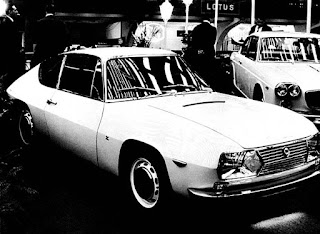
The Lancia Fulvia was in production at the Chivasso factory from 1963 to 1976.  The range included a Chivasso-built Coupe which would become renowned for its success in top flight rally competition.  However, there was another Fulvia variant, also a coupe, named ‘Sport.’  It was initially presented at the 1965 Turin Motor Show.  Styled at Zagato, (by Ercole Spada), it also was built at the Carrozzeria’s Milan factory.  It was especially distinctive in its era in being powered by a V4 engine and driving through the front axle.  The Fulvia Sport is also notable as being the last model introduced before the company’s loss of independence with Fiat’s takeover in 1969. 

This account is mainly about the Sport’s road racing record, primarily in the late 1960s/1970s – it does not cover rallying, in which the model was extensively involved, warranting a separate narrative.  A further emphasis is on activities with the Competizione version.

Fulvia Sport at launch, 1965 (Courtesy Carstyling.ru)
Fulvia Sport at launch, 1965 (Courtesy Carstyling.ru)

The earliest Fulvia Sports (type 818.132) had a 1216 cc engine, but any power disadvantage this capacity implied in the GT1.3 racing class was offset to some extent by the fact that the Zagato body was all-aluminium/magnesium alloy (peralluman) and had a quoted kerb weight of just 915 kg.  This version of the twin cam V4 engine was rated at 79 bhp but was capable of 87 in an HF version for the Fulvia Coupe.  In 1966 a 1298 cc power unit was substituted (types 818.332/362) and this took the Sport up to the 87/92 bhp level.  However, although the alloy bodywork was initially retained, there was a running change in production to a steel shell with alloy bonnet and doors.  These cars, naturally, were heavier, at 1005 kg. 

Of the all-alloy batch of cars, just 27 were built as Competizione versions; (this is according to the chassis list reproduced in the definitive book, Zagato Fulvia Sport Competizione, by Carlo Stella and Bruno Vettore).  Essential to the Competizione variant was a reduction of weight, and so, distinctively, all around the chassis, members and minor panels were drilled with lightening holes.

Competizione chassis, illustrating drilled lightening holes. (Courtesy Vere Lancia)

Most examples were finished in the intense orange colour, ‘Rosso San Siro,’ and featured Plexiglas side glazing.  Flared arches complemented 6J x 14” Campagnolo alloy wheels.  As with the ‘racing’ models offered by other manufacturers, detailed specification was to some extent determined by the individual customer, so degrees of engine performance uprating and chassis refinement varied quite considerably.  A power output a little over 100 bhp would not have been unusual and in a few instances substantially more was coaxed from this relatively small engine.  The Fulvia Sport was FIA homologated (reference #573) for Group 3 racing in November 1967. 

Zagato Fulvia Sport Competizione includes a table of results achieved by Sport Competiziones in the period 1968-75.  This documents a great number of wins (mostly in-class) and top-8 placings.  The majority of events covered were of national status, most of these were held in Italy and many were hill climbs/time trials.  Examples of these would be, Castell’Arquto-Vernasca; Coppa Citta di Enna (Pergusa); Coppa del Chianti; Vittoria Veneto Cansiglio (Fregona) and Coppa Bruno Carotti (Lisciano).

The results of premier national and international grade events are documented in the on-line database of Racing Sports Cars.  The first race result for a Fulvia Sport in this is for a car driven by Claudio Maglioli and Enrico Romanini to 13th place, (1st in T2.0 class), in the 1966 running of the Mugello GP, a round of the World Sportscar Championship.  The race attracted a large entry of Fulvia coupes, but Maglioli/Romanini’s appears to have been the only Sport variant.  Maglioli had been an Italian Touring Car class champion the previous year (in a Flavia Sport Zagato).  He was a key figure in the Fulvia Sport story, with involvement well beyond his role as a works driver.  Magioli’s own business was a successful tuning/preparation workshop and he collaborated closely with Cesare Fiori during the period 1963-6 when Fiori established a new Squadra Corse within the Lancia factory.  Fiori and Maglioli subsequently worked together on the project to create the F&M Special – see below in the notes for the 1969 season. 

1968

The season saw Maglioli at the wheel of a well-documented Competizione - #1911.  This was built very early in the year and immediately shipped to the U.S. for the 24 Hours of Daytona.  Together with #2450, the car has been characterised as a ‘Prototype.’  Records indicate that #1911 was originally fitted with a 1401 cc engine.  Entered by Algar Enterprises for Maglioli and Giancarlo Baghetti, the car was an early retirement from the race, lubrication-related engine failure being cited as the reason.

#1911 at Daytona, February 1968


Claudio Maglioli (right) with Giancarlo Baghetti at Daytona. (Courtesy FulviaClub.it)


The following month, #1911 fared little better at the 12 Hours of Sebring.  It did complete over a quarter of the race distance, but again was sidelined with an oil starvation engine failure.

Claudio Maglioli with #1911 at Sebring, 1968. (Courtesy FulviaClub.it)

Although in these season-opening events #1911 had been a lone pioneer in the U.S., at April’s Targa Florio there were no fewer than ten Sports, (two Prototypes and eight Competiziones), running in the race and endeavouring to stay out of trouble on the hazard strewn Sicilian roads.  And, by enlarge, they did pretty well.  Best was the factory Squadra Corse Prototype, #1911, (misreported as #1238 in some resources), in the hands of Sandro Munari and Raffaele Pinto which finished 11th, 7th in the P2.0 class; (bear in mind that it was giving away 599 cc in terms of the class capacity limit.)

Munari/Pinto, Squadra Corse HF Lancia, 11th overall

Jolly Club was a racing team which frequently fielded Lancia cars in both circuit racing and rallying.  It had been founded in Milan in 1957 and by the late 60s/70s was active internationally.  In period, the Club’s cars were often run in a distinctive light blue with a pair of yellow stripes on the bonnet; (an example of this can be seen in the Present Day section of this article).  Alternatively, blue bonnet stripes on the standard Rosso San Siro was sometimes favoured.  Three Jolly Club-entered Sports figured in the race’s results.  Best of these was the example driven by Giuseppe Giacomini and Sergio Barbasio, finishing not far behind Munari, in 14th.  However, importantly, this car did not have the larger engine and was run in the GT1.3 class, of which it was the winner.

Giacomini/Barbasio, Jolly Club, 1st GT1.3 Class


A second factory Prototype, #2290, was driven by Claudio Maglioli and Marco Crosina to 15th place overall.  The ‘flimsiness’ of these extensively lightened versions is evident in the photograph below.

Maglioli/Crosina, second works Prototype, 15th overall. (Courtesy FulviaClub.it)

One Sport which did not stay out of trouble on the Madonie circuit was that of two drivers with inscrutable pseudonyms – Snoopy and Nano.  Although their car appears in the photograph below to be well off into the boonies, it was successfully relocated to the road and finished the race in 31st place.

‘Snoopy’s’ Sport being recovered

These two ran in close company - #12 driven by Zefferini Filippi and Giorgio Danieli, and #18, Maurizio Zanetti and Pietro Corbellini:

Filippi/Danieli lead Zanetti/Corbellini

A factory Squadra Corse Sport was run at the Mugello Grand Prix two months later for Magioli and Munari, but the outcome for this has not been found up to now.  However, in the similar event, the Coppa Citta di Enna, in August, Matteo Sgarlata is recorded as having headed a 1-2-3-4 of Sports, ahead of a small field including Alfas, a Fiat and an Alpine. 

1969

Once again, chassis #1911 contested the early season U.S. races and the entries were handled by Algar Enterprises.  Algar (an abbreviation of proprietor, Al Garthwaite’s, name) was a business developed from the Rosemont-based automotive bodybuilder, Derham’s, into a successful and still-active dealership now trading as Ferrari Philadelphia.  At Daytona, Magioli/Pinto brought their car home in 11th place overall, winning the P2.0 class.

Claudio Magioli (right) with Raffaele Pinto at Daytona. (Courtesy FulviaClub.it)


Maglioli/Pinto winning the P2.0 class. (Courtesy adrenaline24h.com)

At Sebring, the same pairing finished 18th, 4th in the P2.0 class.  Headed in class only by two Porsche 906s and a Dino 206, this was another strong endurance performance.

Emmebi 1/43 scale model of Magioli/Pinto’s Sport as run at Sebring.  (Courtesy emmebimodels.it)


Jolly Club was the entrant of two Sports at the Monza 1000 kms in April 1969.  Although one of these failed to finish, that driven by Luigi Cabella and Giovanni Marini won the GT1.3 class, finishing 18th overall.  Another Sport, of Eugenio Foschetti, came in 20th, second in class.

Jolly Club was again much involved in the following month’s 53rd running of the Targa Florio.  Competizione cars were run for Tony Fall and Alberto Ruiz-Gimenez, 18th overall and GT1.3 class winners, and for Cabella and Marini (41st).  A third, #1289, was entered by the Club for Cesare Poretti and Fiorenzo Genta, and this took 23rd place, 3rd in class; (see also the Present Day section later in this article).  A Scuderia Pegaso- run Competizione was shared by Raffaele Restivo and Alfonso Merendino (20th).  The only Competizione not classified was that of Angelo Rizzo and Gianni Arcovito. 

‘Standard’ Sports also classified were: Franco Lisitano and Matteo Calabrò, (30th); Girolamo Capra and Angelo Lepri, (47th).

Emmebi 1/43 scale model of the class-winning Competizione of Fall/Ruiz-Gimenez. (Courtesy emmebimodels.it)


Competizione of Restivo/Merendino, 2nd in class


Jolly Club Competizione of Cabella/Marini, classified 41st, but affected by a fire.

Scuderia Palladio was a racing club founded in 1964 in Vicenza.  The spirit of the team was characterised by its affectionately-regarded logo:


The Scuderia entered a number of drivers into a range of Italian and International circuit events and rallies.  It was responsible for the lone Sport, #1340, run in June at the Nurburgring’s 1000 kms.  Crewed by Girolama Capra and Angelino Lepri, it managed 8th in the GT2.0 class.  Once again, the result for such a 1401 cc-engined example should be seen in the context of the disadvantage conferred by classification as a Group 3 car with a 2000 cc capacity limit.  (This particular Competizione also features in the Present Day section later in this article).

Scuderia Palladio drivers Capra/Lepri, 8th in class at the Nurburgring

By this stage of the season, the Factory Squadra Corse had become in the habit of using the Fulvia F & M Special in events where previously it might have deployed the Prototype Sports.  F & M was an abbreviation of the model’s joint developers, Cesare Fiorio and Claudio Maglioli.  It was a Factory Fulvia Coupe converted to a lightweight (720 kgs) open barchetta powered by a 1600 cc, 160 bhp version of the V4 engine.  The effectiveness of this concept was demonstrated at the Nurburgring by the two F&M Specials placing first and second in the P1.6 class. 

The next relevant major event was the Mugello GP.  At the front of the field this race saw a great selection of some of the most charismatic Sports Cars of the era – Abarth 2000SP, Lola T70, Porsche 906. Alfa Romeo T33/2 and Alfa Giulia GTA.  However, it was also a race which featured a strong Fulvia Sport performance, with a GT1.3 class 1-2-3-4-5 result.  This was headed by the Jolly Club pairing of Germano Nataloni and Francesco Morelli.  With all five entered Sports finishing, the model’s improved reliability was evidenced. 

1970

There continued to be no class provision in the International Championship for Makes for capacities considerably smaller than 2000 cc.  With the competitive disadvantage this conferred on relevant Lancia Sports/GT models and given results in previous seasons, there was no incentive for European teams to journey to the U.S. for the opening races at Daytona and Sebring.  No Fulvia Sports ran at either event in 1970. 

At the Targa Florio, a Jolly Club Sport driven by Franco Lisitano and Giuseppe Pirrone managed a mid-field finish, 3rd in the GT1.3 class.  Of the other five Sports which raced in Sicily, two filled the next two class places and three failed to finish.  In the results database two of the cars are recorded specifically as Competizione examples - #282 (Jolly Club) and #292 which was run by Palermo-based Scuderia Pegaso, (founded 1961).

Jolly Club drivers Lisitano/Pirrone (“Ramon”/”Zerimar”) 3rd in GT1.3 class at the Targa Florio


Another Jolly Club car – driven to 5th in class  at the Targa Florio.  © www.schlegelmilch.com.

Scuderia Pegaso #292 of Mantia/Lo Jacono, 4th in class; Scuderia’s logo, right

The Coppa Inter-Europa was run in September at Monza.  Jolly Club entered three Sports and another car was entered and driven by Amedeo Donzelli.  Aldo Frisiani achieved a 2nd in class placing for Jolly Club, whilst Donzelli was 3rd. 

1971

By this season the further development of the Factory-built Fulvia Coupe was demonstrated by the entries for the Targa Florio.  The model had been significantly updated generally in 1970, (designated Series 2), and the model’s potential in competition was further enhanced by availability of a 1584 cc version of the engine, first seen in the Series 1 Rallye HF model of 1969, (also known by its nickname, Fanalone).  The Series 2 1600 HF boasted 113 bhp and was an excellent base for a racing car.  The Sport, however, did not benefit from the 1584 cc engine until the following year.  Reflecting these points, The Fulvia versions taking part in Sicily this time were, HF 1600 Coupe – six; 1300 Coupe – four, Sport 1300/Competizione – two.  Best result for a Sport was for the car driven by Raffaele Restivo and Alfonso Merendino, GT1.3 class winner.  The focus on the utilisation of the Coupe HF 1600 was emphasised by the fact that the two Squadra Corse entries were both with that model, though both failed to finish.

Class winning Jolly Club Sport Competizione of Restivo/Merendino. Courtesy Francesco Terranova

1972

Once again, just two Sports were to be seen in the Targa Florio.  The Competizione driven by Franco Lisitano and Toti Fenga finished 28th, 3rd in the S1.3 class.

Third in class on the Targa Florio for the Competizione of Lisitano/Fenga

Elsewhere by now, most utilisation of Sports was confined to more minor events of national or regional status only.  Meanwhile, the Lancia marque was mainly being represented at the higher levels of competition on-track by the HF Coupes.

1973

This was the last year in which the Targa Florio was an international event with the results counting towards the World Championship.  Just one Sport ran, driven by Giovanni Martino and Ugo Locatelli – it failed to finish.

‘Jolly Joker,’ #182 of Martino/Locatelli – DNF on the Targa Florio


1/43 scale model of #182

This year saw the debut of the Stratos model which was soon re-establishing Lancia’s elite grade motor sport credentials.  The model scored a 2nd overall result in the Targa Florio and a victory later in the season in the Tour de France.

Present Day

Looking at some examples of Sports retailed/auctioned over the last decade, the following observations can be made about the present day value of the model: 

Reflecting the rarity of the Competizione variant, a figure of £175,000-£200,000 is realistic.  This would be for a car properly restored with reasonable originality of specification and on the Stella/Vettore list of 27 ‘real’ Competizione chassis numbers.  These are all 1300 cc cars.   

Whilst it is possible to find a complete/running 1300 Series 1 for less than £20,000, such an early car in good order is likely to command £40-50,000. 

1600 examples, typically make £35-£40,000. 

‘Competizione tribute’ cars tend to be advertised with a £50,000+ price tag.


In 2016 in Milan, at the spectacular Duemila Ruote auction, the Competizione #1340 was sold by RM Sotheby’s for €162,400.  This was the very first Competizione road-registered, (on 15th May 1967), while the property of Carrozzeria La Zagato.  Also distinctive was this being the first Competizione painted in the San Siro Red hue which became de rigueur for the model.  And, as already mentioned above in the account of racing in 1969, it ran well in that year’s Nurburgring 1000 kms; (the previous year it had finished 4th in class at the Targa Florio, driven by Zeffirino Flippi and Giorgio Danieli).


#1340 racing in-period Courtesy Fulvia Sport Zagato (Facebook)

As sold in 2016, the original 818.302 engine had been replaced by an 818.342 Group 4 specification unit.  The gearbox also had been updated – a 5 speed now in place of the original 4 speed.

#1340 photographed for the Duemila Ruote sale catalogue


Sicily’s capital, Palermo, has in recent years been the venue for an event known as the Monte Pellegrino Rievocazione Storica.  It is characterised as, ‘not a speed race, but a “dynamic competition of elegance.”’  At the 2014 staging, another early Competizione was prominent - #1289.  This was the second Competizione built and was registered in January 1968, to owner, Fiorenzo Genta.  It was one of several cars than ran under the Jolly Club banner with its first event being the Monte Carlo Rally.  Later that season it sustained extensive and very serious damage requiring a major rebuild.  It emerged however in good shape for the following season, firstly, as referenced above, when Genta, partnered by Cesare Poretti, took it to 3rd in the GT1.3 class in the Targa Florio.  There followed an excellent string of circuit-racing finishes, as a result of which Genta was crowned champion of the 1.3 class of the Italian GT Championship. 

It was originally painted in Montello Amaranth – a deep red hue.  However, when rebuilt in late 1968 it was repainted in white, with blue bonnet stripes, as seen in the 2014 photographs below:

#1289 as seen on the Monte Pellegrino Rievocazione Storica in 2014

Of the two Squadra Corse Prototypes, #1911 no longer exists – it was scrapped following damage sustained when it was in use for autocross racing, (date unknown).  However, the sister Prototype #2290, came into the ownership of Gloria Nai, (daughter of a Lancia dealer), in 1969.  More recently the car has been photographed and its good state of preservation is very evident:


#2290 Prototype in Gloria Nai’s ownership

In period, Sports proved highly competitive in hill-climbing.  Today, this form of motor sport is popular on the Historics scene.  At one such event, the Vittorio Veneto-Cansiglio, #1890 is seen in action below.  This is the Competizione owned by the Carlo Stella, seen I would guess, around the turn of the millennium.

#1890 hill-climbing

Stella documented #1890 extensively in his book.  He said about it, ‘The many races in which this car competed and with over 30 victories to its credit in its almost eight years of racing make 001890 one of the Fulvias with the most prestigious racing pedigrees.’  In its first year of competition it was mainly driven by Ugo Locatelli for whom it was bought by Jolly Club.  Stella lists seven class victories in 1968 for Locatelli in #1890.  At that time the car would have looked a little different, with numerous decals and stickers, notably script stickers advertising Jolly Club.  Apparently, this ‘look’ was re-created more recently, as evidenced by the photograph below.  This shows designer, Ercole Spada of Zagato, alongside the car at a Lancia History day in 2016.


Ercole Spada with #1890. Courtesy Fulvia Sport Zagato (Facebook)


Competizione #1903 was purchased new by Guido Caffi and he raced it successfully in both the 1968 and 1969 seasons.  Though he sold it in the Seventies, he bought it back in 1996 and took up running it in Historic events.  The car is seen below on the Rechberg Hill Climb in 2009:

Guido Belli in #1903, Rechberg, 2009. Courtesy Roman Crejci

Here, in 2021, it is on the Vernasca Silver Flag:

#1903 Courtesy Top Classico

The Silver Flag has in recent years been an excellent event on which to see Competiziones.  Here is another example – #1901 - (courtesy of the Vernasca Silver Flag Official Group, (Facebook):

#1901 – one of the two cars purchased by Jolly Club in January 1968.  Here on the 2015 Silver Flag


#1907 was originally owned by Luigi Macciocca whose Rome workshop became renowned for expertise in preparing Sports.  The car was campaigned in 1970/1 by Bruno Ripani, achieving five significant national class victories.  It is seen below in 2017 and 2022: 

#1907 in 2017. Courtesy Frans Verschuren

#1907 on Vernasca Silver Flag, 2022

Another Competizione associated with Macciocca is #1904.  It was raced by Stefano Salvi in 1968/9/70.  According to Stella/Vettore, it took a class win at Mugello in the 1968 Grand Prix there.  However, the Racing Sports Cars database records the car as a DNA at that event.  I suspect that it did ‘arrive,’ but was unable to start the race having been damaged in practice – see photograph below:

#1904 at Mugello, July 1968. (Courtesy Archivio Actualfoto Bologna)

In May 2021 Speedholics posted an article written by Michele Di Mauro about this car’s history and its recent restoration by Roberto Ratto.  As can be seen in the photograph below, the damage to that front wing has been more than made good!

#1904 today. Courtesy Alessandro Barteletti

Stella/Vettore’s list of Competiziones includes three chassis numbers for type 818.362 cars.  These were drawn from early in that run, when all of the bodywork was still in alloy.  The engine for an 818.362 was ‘S’ specification – still 1298 cc, but with an increased – to 92 bhp – power output.  Stella observes: 

Fulvia Sport 1.3 S manufacture began in 1969 and the number of this series started from the top again with 001001 and, not long afterwards – probably at the request of private owners – another small lot of Fulvia Competiziones were produced with all-peralluman bodies, but on 1300 S mechanical components.

No chassis in this Competizione production run on 1300 S mechanics was ever photographed in a race or appeared in copious race data of the period.  It is, therefore, reasonable to suppose that this was a production run to meet the demands of enthusiasts of the period, who wanted to own a road car with a body entirely in peralluman and that was as much like the Competizione as possible, but with 1300 mechanics that competed in long distance and other races of the period.  Obviously, these Competizione belong to the 1.3 S Type 818.362 series and not Type 818.332 like almost all the others. 

One of these, #1277, was sold in 2020 by the French auction house, Osenat.  It made €49,200.  Auction catalogue photographs are shown below:

#1277 Courtesy Osenat Auctioneers


As I would hope the foregoing demonstrates, the Fulvia Sport is a characterful example of Zagato style and body/chassis construction expertise.  Allied with the well-proven Lancia powertrain/steering/suspension elements, it constituted a successful racing GT.  It’s just a shame that it was not made in greater numbers, allowing it to be more accessible today for people wanting to own an aesthetically and functionally appealing example of 1960s Italian sports car manufacturing at its best.