Today the general perception that Formula One
is the be-all and end-all of motorsport is more marked than ever, with recent other-category
innovations having failed to really grab headlines. Formula E does not command very much interest
and Sportscars/Prototypes in the hybrid era have failed to impress, having none
of the aesthetic/technical/competitive charisma that we saw in the eras of
Jaguar and Aston Martin at Le Mans, Ford vs. Ferrari in the 60s, 917 vs.512, 956
vs. Lancia and Sauber in Group C. At the
same time, ‘junior’ formulae such as F3 now lack pizazz, being spec formulas,
with little of interest in technical developments/differing car
capabilities. So, from a contemporary
perspective, we would expect that a F1 seat would necessarily represent the
pinnacle of any driver’s career. On that
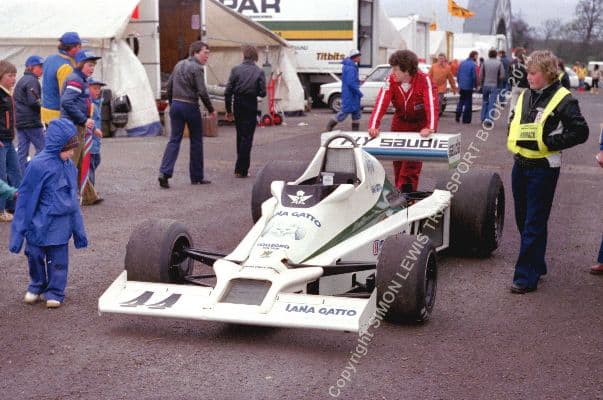
basis, I’m showing below the Williams FW06 that Giorgio Pianta piloted in 1979:
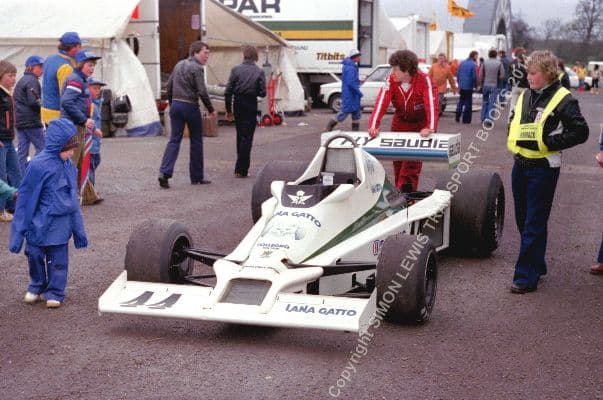
And although Pianta scored an excellent 5th
place at Nogaro in that car, his career highlights can be chosen, mixed and
matched, from this more than impressive list: 1965 Italian Rally Trophy; 1966/67
European Touring Car Championship campaigns with Squadra Corse Lancia and
Porsche; team ETCC driver with Autodelta, 1968/69; class winner of the Italian
Touring Car Championship, 1971/72 and developed the 1971 Targa Florio class winner
for Conrero; 3rd in an Osella in the Targa Florio in 1977; developed
the Fiat Abarth 124 Rally and X1/9 competition models; 1986-96, manager of Alfa
Romeo Corse, in which period the Marque achieved many wins in Touring Car
racing, including a spell of domination in the DTM; subsequently returned to
Fiat to take charge of Fiat Auto Corse.
During his main driving career, Pianta took part in around 700 race
events, winning three Italian National Championships. This article is focused on Pianta’s circuit
racing activities/career – he also saw much achievement in the realms of
rallying, not covered here, but well documented elsewhere.
The earliest regulated motorsport
participation recorded for Giorgio was a drive in the Mille Miglia in
1953. Pianta was at that time 18 years
old. He shared the wheel of an Alfa
Romeo 1900 Ti with Piero Palmieri, but they failed to finish.
An outing at Monza five years later saw him competing
in a GT Cup race organised by the renowned Sant Ambroeus scuderia. Giorgio is seen below in his Fiat 500.
Nowadays,
the importance of networking is emphasised to people beginning their commercial
career, as
if a recently invented ‘science.’ Yet,
over sixty years ago, Giorgio was proving himself a natural, effective
practitioner. He managed to arrange for
himself a co-drive with the son of Ferrari’s Eugenio Dragoni in an Abarth 1000
TC. Exploits in this car attracted the
attention of Sandro Fiorio, PRO for Lancia.
This turned out to be an especially rewarding contact, as Sando’s son,
Cesare, was responsible for the Lancia HF Squadra Corse. Thus, in 1963, Giorgio found himself with a
‘works’ Lancia drive. As a result,
he was soon at the wheel of such cars as the Flaminia Sport, as seen below
at Monza:
Giorgio
also remained associated with the Scuderia Sant Ambroeus for several years,
driving various of its cars, for instance: Ferrari 250 GT SWB in 1962, Alfa
Romeo TZ in 1964 and the arcane ASA RB 613 in 1965’s Targa Florio. Partnering Giorgio Bassi, a 3rd in
class resulted. The car is seen below:
Courtesy of Vittorio Giordano
1966
saw Pianta co-driving with Lancia rallying star, Sandro Munari, at the
Nurburgring 500, where they took their Flavia Sport Zagato to 4th in
Division 3 of the Touring Car class:
The following season was a notably successful
one for Pianta in touring cars, this time in a Division 3 Scuderia Sant Ambroeus
2.0 Porsche 911. Best results of the
year were the outright victory in Belgrade, and a class win in Budapest.
By early 1968, his recent
performances in touring cars had impressed Carlo Chiti enough for him to
recruit Giorgio to the Autodelta driving contingent. Pianta soon repaid Chiti’s confidence with a
Division 2 class win at Monza in a Giulia Sprint GTA 1600, co-driven by Teodoro
Zeccoli. For Le Mans that year, Pianta
was back with Scuderia Sant Ambroeous, entrusted in company with Enrico Pinto
with the team’s Iso Rivolta. But the car
was accident damaged in practice and thus failed to make the start.
The
Sant Ambroeus Iso Rivolta for Pianta/Pinto, Le Mans, 1968
Giorgio
rounded off the Sixties with drives of increased diversity, both in terms of entrants
and types of car – BMW 2002 Ti – Porsche 910 – Lancia Fulvia HF; Escuderia Nacional CS – Ecurie Nat. Espagnole. Another ‘new’ employer coming to note in 1970
was Monzeglio Corse, which entered an AMS-Alfa for the Targa Florio to be
driven by Giorgio and Mario Zanetti. And
they made a good job of it: winners of the P 1.3 class.
Left:
In the Targa Florio pits, (Schlegemilch). Right: Courtesy of John Phillips
Virgilio
Conrero was a significant personality on the Turin automotive scene, especially
so in the Fifties/Sixties when he was closely associated with Alfa Romeo. For engine tuning and modifications requested
by customers and motor sport Alfisti, Conrero fulfilled the role eventually
performed by Autodelta when set-up as a factory ‘extension.’ In fact, the establishment of Autodelta and
thus a loss of business volume, led Conrero to branch out into enhancement
developments for other makes and to step up his focus on Renault engines, which
had been a secondary interest during the period of concentration on Alfa
Romeo. But perhaps the most important new
involvement was with the Opel brand. A
major strand of this was an agreement with General Motors to utilise his
Conrero Squadra Corse to run Opel products on-track. The project was facilitated by the efforts of
Romano Artioli, leading dealer for Opel in Italy. He maintained a steadfast optimism that the
GT model could be made an effective Group 4 racer and persuaded Conrero to
commit to its development, whilst he also managed to raise necessary funds from
his fellow Opel dealers. Eventually,
this enabled chassis improvements to be made and an engine output of near 200
bhp achieved – impressive, considering that the standard production version
boasted just 88 bhp. Conrero took Pianta
on to play a lead role in this work, drawing on Giorgio’s extensive experience
in developing cars for competition. It
proved to be a very successful arrangement, with Pianta becoming the large
engine class winner in a 3.0 Opel Commodore of the Italian Touring Car Championship
in both 1971/72. At the same time, he
oversaw modifications to, and the preparation of, four Opel GT 1900s for the
1971 Targa Florio. Against tough
opposition – especially numerous Porsche 911s - the example driven by Paolo
Monti and Salvatore Calascibetta achieved an excellent 9th overall,
first in class finish. Pianta also
co-drove, with Pino Pica, but his Opel was forced to retire on the fourth
lap. Also failing to finish was the
similar car of Giuseppe Marotta and Gianpaolo Benedini.
1971 Targa Florio. Left:
Marotta/Benedini, courtesy Sergio Tino;
Centre: Pianta/Pica, courtesy Maurice
Van Sevecotte; Right: Monti/Calascibetta, ©Schlegemilch
Conrero
mounted a similar effort for the 1972 Targa.
Further development had resulted in a new cylinder head, enabling an
increased power output of over 200 bhp.
Of the three GTs entered, two were carburettor-equipped, whilst that to
be driven by Pianta and Giorgio Schön featured Kügelfischer mechanical fuel
injection, and this enabled a further power increase, to 214 bhp. This was enough for Pianta to be able to post
a 2000 cc class fastest time in practice, significantly below what the Porsche
competition was managing. However after
an enforced power unit change, the engine could not be fired-up for the start
of the race.
1972 Targa Florio.
Pianta/Schön in practice. Courtesy Revs Institute
Conrero-Opel
on 1973 Targa Florio (Pica driving)
Also
in 1973, Giorgio raced a Lola T280-Ford DFV for Jolly Club at three major
events. Again partnering Pino Pica, a 7th
place finish was achieved at the Dijon 1000 kms. The pair were together once more for the
Monza 1000 kms but were out before quarter distance due to a failed coolant
hose. Further disappointment followed at
the Nurburgring 1000 kms for Giorgio and co-drivers, Mario Casoni and Manfred Mohr,
when gear linkage problems caused an end to their race after just 6 laps.
1973
World Championship for Makes, Lola-Ford 280. Left: Nurburgring (Courtesy
Girardo);
Centre: Monza (MotorsportImages); Right: Dijon (MotorsportImages)
Jolly Club replaced the car with a T282 model
for the 1974 season, again enlisting Giorgio to drive it. At the Monza 1000 kms, a race dominated by
the Alfa 33s, Pianta/Pica finished 6th after winning a close battle with
the Porsche 908 of Joest/Casoni. At Spa,
the Lola was sidelined with ignition failure.
He used the same car for the Targa Florio, qualifying it fastest of the
entire field. This was the first year
after the Targa’s de-rating as a championship event, so the competition was
less intense than formerly, but Pianta’s achievement in taking pole is
validated by the fact that he outpaced the two Stratos entered by Lancia
Corse. However, the car failed to finish
the race, suffering a rear tyre failure after 4 laps. In the photograph below, Pianta is seen in
the centre, behind the rear wing.
Adj.jpg)
Towards
the end of the year, in October, Pianta shared the Abarth works’ Fiat Abarth
SE030 with Christine Beckers on the Giro d’Italia. This was a new product development car which
was a forerunner of the Lancia Montecarlo.
In addition to looking good, it ran well too, and was bettered in the
event only by the Group 5 Lancia HF Squadra Corse Stratos Turbo of Jean-Claude Andruet
and Michèle Espinosi-Petit. On this
event the following year, Pianta went one better and took the overall first
place in a Group 5 Fiat Abarth SE031, this time co-driving with Bruno Scabini.
Left: Partnering Christine
Beckers on the Giro d’Italia, 1974, ©Pininfarina,
and, right, co-driving to
victory on the same event, 1975, with Bruno Scabini
Otherwise in 1975, Giorgio was putting
mileage on Jolly Club-liveried Lolas, partnering with Vittoria Brambilla, but it
proved to be a run of races that was characterised by DNFs and accidents. No doubt he was pleased to get his hands on a
Scuderia Aneneo/Jolly Club Stratos for the Targa Florio, and, sharing the
driving with Giorgio Schön, he made the most of the
opportunity, finishing 7th, 4th in class.
1975 Targa Florio –
Pianta/ Schön (Targapedia)

Courtesy
of Vittorio Giordano (Targapedia)
Pianta followed up the Targa success with an
even better one 17 months later, sharing the Giro d’Italia-winning Group 5 Stratos
HF with Markku Alén and Ilkka Kivimäki:
1979 was a season which reflected Pianta’s
involvement at Corse Lancia where he was significantly instrumental in
developing the Montecarlo model for the track, creating the turbocharged
version which was highly successful in seasons, 1979-81 – see Any Tine, Any Place –
Montecarlo for Instance. In addition to
much effort contributed in the workshop and on the test track, Giorgio drove
early versions of the Montecarlo at the 1979 Six Hours races at Mugello, Silverstone
and Vallelunga. Whilst these outings
resulted in non-finishes, the performances helped to establish the car’s competitiveness
and support developments for improved reliability.
The Seventies/early Eighties had seen Pianta
with a roving brief, testament to his versatility: leading test driver at Corso
Marche for Abarth; influential ‘behind
the scenes’ at Lancia with the development of the S4 Delta; at Alfa Romeo he strove without success to
help establish an Indycar campaign with a March CA90 chassis powered by a 2648
cc turbocharged V8 engine.
Alfa Indycar Turbo V8
engine, 1990.
Courtesy of Roberto Motta
After a long period of uncertainty and its
inability to return to profitability, Alfa Romeo was absorbed into the Fiat
Group in 1986. Autodelta’s ‘abolition’
had been commenced in 1982 when responsibility for running the F1 cars was
transferred to Giampaolo Pavanello’s Euroracing team. The operating base of Autodelta was moved to
Senago, and, not long after, the business effectively closed with the Fiat
buy-out. As a replacement function, Fiat
revived the Alfa Corse name and appointed Giorgio to run it as a factory
department. Initially, Pianta sought to
revitalise the perception of Alfa Romeo as a leading light in motorsport by
developing the Alfa 164 V10 Procar. Though
this project stalled, the engine was utilised in the development of a proposed
new Group C prototype for endurance racing.
The car emerged after collaboration with Abarth as the SE048SP, but with
a change of power plant to the Ferrari 3.5 V12.
However, by autumn 1990 it was apparent that the revised Group 6 rules
for which the car was designed would not be attracting substantial entries from
other manufacturers, and this project too was cancelled.

Left: 164 Procar.
Courtesy of Michael Ward Right:
SE048SP Group C. ©Kevin Van Campenhout
After the disappointments of the aborted
Procar and Group C programmes, Alfa Corse turned its attention to the touring
car category with the Alfa 75 model.
Whilst this was relatively low-key, it laid the foundation for a more
concerted campaign beginning in 1992 with the new 155 GTA model. Promising though this appeared to be, the Ti AWD
model was preferred for an assault on the DTM the following season. With leading drivers Nicola Larini and Alessandro
Nannini, the car was very successful in 1993 and the following three seasons,
racking up 38 victories and winning the DTM in 1993 and the BTCC in 1994. It has been reported that Pianta took every
opportunity while running the programme to test cars on-track and was well
known for being able to set fully competitive times. Going a stage further, it is said that he
clandestinely drove in some races - in his appreciation of Pianta Peter Collins
writes:
At one time he was
itching to drive a GTA in a race, but Fiat shuddered at the implications. He
still did it, under the pseudonym of ‘Sonnenkinde’ – child of the sun.
Collins
also recounts this anecdote, attesting to Pianta’s driving abilities and
attitude:
Sometimes testing did
not always work to plan. One day at La
Mandria, testing a Delta S4 on a circuit, the technicians called him in and
told him that their telemetry showed that he was not driving quickly enough
through a particular corner. “But I
cannot drive any quicker through there or I will have a large accident,” said
Giorgio. “Nonsense, the figures show
that you can. Go out and try harder,” said the engineers. Off went Giorgio, trying harder than ever (at
that moment making loud puffing and wheezing sounds as of an S4 flat out). Suddenly, there was silence. After a while, a visibly shocked Giorgio
arrived back on foot carrying the mangled remains of the driver’s door – there
was little else left of the car. “Was
that fast enough for your machines?” asked Giorgio.
After the period of Alfa Romeo touring car
successes, Pianta was put in overall charge of Fiat Auto Corse, thus affording
him opportunities to direct the sporting enterprises of Fiat, Alfa Romeo,
Lancia and Abarth. In addition, he was
president of the Associazione Nazionale Corridori Automobilisti Italiani, (similar
to the BRDC) and contributed to the work of the Italian motorsport governing
body.
Giorgio died in 2014 at the age of 79.


Adj.jpg)

crop.jpg)


