Showing posts with label Conrero. Show all posts

Monday, December 9, 2024

The Low Glow Halo - Alfa Romeo 2600 Sprint Zagato

In 1985 I encountered my first Alfa Romeo 2600 Sprint Zagato ‘in the flesh’ on a visit to Piero Pesaro’s Alfetta Racing Centre in Brentford.  Whilst we were walking around the premises, discussing the possibility of appointing the business as an official Alfa Romeo ‘Service Point,’ we reached a corner where a Junior Z and a TZ1 were at rest.  My attention thus became diverted from the 2600 SZ, at which I’d intended to take a close look.  Some years later (!) I’m now taking the opportunity to do that, even if only on a virtual basis.  Back then, our UK sales were on a marked downward trend, and we needed not only better quality ‘regular’ production cars but also a ‘halo’ model to help re-establish the marque’s reputation and attractiveness to new car buyers.  Two decades earlier, Alfa Romeo , though enjoying improving sales volume prospects with the Giulia family of models, was intent on the same thing, believing that however practical the Giulia was for the current market in volume terms, there should be a six cylinder model at the head of the range to convey brand values related to sport/performance and prestige/technical sophistication.  As a result, the 2600 was created and presented in Geneva in ’62.  Initially there was a Berlina, a Bertone Sprint coupe and a Touring Cabriolet.  On launch these models were not perceived by the Press as ‘halo car’ material, being cosmetically little different from the 2000 models they effectively replaced.  However, the new six cylinder in line engine was recognised as a significant addition to the marque’s inventory and worthy of a more glamorous body form to carry it.  With an established relationship in mind and the success of the recent collaboration resulting in the Giulietta SZ and the ongoing TZ project, it was not surprising that Zagato was looked to for this, especially as a 2600 Sprint body by the Carrozzeria could be expected to enhance performance through light weight, (even though Alfa Romeo specified that it should be made of steel), as well as being aesthetically in tune with the Zeitgeist.  As is usually reported, Ercole Spada, (at Zagato since ’60), drew the initial shape, but said in more recent times that he was not responsible for the finalised, production styling.  In this form, from chassis # 856006, one hundred 2600 SZs were made during ‘65/’66/’67.

Alfa Romeo 2600 Sprint Zagato body. Courtesy Scuderia Azzurra

By the time the Zagato version of the 2600 Sprint was presented at the ’65 Frankfurt Show – three years on from the first prototype – it had a big job to do.  Ongoing evaluation of the Berlina, Coupe and Cabriolet models had not been favourable and it had been generally accepted that the car had failed as a ‘top of the range’ product worthy of Alfa Romeo’s heritage.  Performance and handling were not rated favourably by journalists, test drivers, dealers and customers alike.  The Solex carburettor set-up was considered much to blame for the performance aspect.  The triple 44 PHH carburettors operated on the two stage principle and were therefore dependent on optimum delivery of vacuum.  Less ‘temperamental’ Webers - 40 DCOEs  - were available as a factory option with a bespoke manifold.  The handling shortcomings were attributed to a major extent to the weight and far-forward location of the engine.  With this in mind, it is quite amusing to read Bill Boddy’s report/road test of the Sprint in Motor Sport magazine’s November ’63 issue.  It is a formulaic, bland piece typical of the man, generally complimenting the car, presumably – as was the convention then – as reciprocation for the wining and dining he would have enjoyed on Alfa Romeo-hosted press events such as new model launches, factory tours, etc.  His headline summary read: “A beautifully-appointed, smooth-running, extremely handsome Italian saloon with impeccable handling and controls.”  In fact, the Zagato version was needed as soon as possible if there was to be any chance of salvaging Alfa’s ‘halo car’ aspiration.  As would become ever more clear as time moved on, doing this with a six cylinder car was not an inherent expertise Post-War at Portello/Arese.  The Alfa 6, 164 3.0 and Alfa 90 were 70s/80s duds and it wasn’t until the GTV6, Alfa 75 3.0 and SZ (ES30) arrived that the company had products that in any way fulfilled the desired role.

Left:#856075, Solex 44PHHs. Courtesy SVS Ltd; right: #856061, Webers. Courtesy Milestone Motor Cars

But the 2600 SZ did have ‘ingredients’ that offered hope in ’65.  Thanks to Zagato’s body construction principles, (even though the Carrozzeria was not commissioned to build it in aluminium as was its usual custom), it weighed 9% less than the Bertone-bodied Sprint.  This, along with 20 more bhp from a modified state of tune of the triple Solexes, certainly helped with the performance aspect while also allowing better handling/steering.  The SZ could accelerate from rest to 60 mph in 9.1 secs and reach a top speed of 130 mph.  The original first prototype, #856001, was constructed on a Spider chassis and shown in late ’62.  This was subject to further development the following year and eventually appeared as below, with notable refinements to the front panel, shield grille and bonnet intakes.  Note also that the rear haunches/C post are very different from the forms adopted for the production version.

Courtesy Peter Bovym Fotografie


It was early ’64 before a third prototype emerged.  The front end styling had been further revised, giving a pronounced aggressive appearance characterised by the enlarged shield grille.  #856003 was taken up as his ‘daily driver’ by Elio Zagato.  The car is shown below, left, and in comparison with an early production example, #856015 (Q3, ’65), illustrating how the front end had been ‘tidied’ in finalising the styling.  Of main note are: simplification of bonnet/front panel; relocation of Alfa Romeo badge to incorporation with the grille shield frame; revised grille mesh pattern; relocation of indicator lenses to the leading edge of front wings:

Courtesy Zagato-Cars (left) and Bonhams Cars (right)


Production version of grille, #856061. Courtesy Milestone Motor Cars

Left, #856034. Courtesy Zagato-Cars; right, #856053. Courtesy Fantasy Junction

The rear, chromed bumper bar was one piece with two integrated number plate lamp holders on the upper face in the centre.  On early cars this mainly had a constant depth along its total length with a slight taper towards the wheel arches.  On later examples the corners were flared, as seen, right, below:

Left, rear bumper, early version. Courtesy Lana-Classic; right, #856079. Courtesy Cool Classic Club

The type and location of the tail lamp units and reverse lamp remained unchanged throughout the production run.  Customisation is seen on #8560075 which has a rear plate lamp mounted centrally on the underside of the trailing edge of the boot lid.  #856079 had a boot lid release knob mounted above the tail lamp unit in the rear face of the right hand wing.

Tail lamp unit, #856079. Courtesy Cool Classic Club


A body detail feature often commented on is the absence of an external, body-coloured sill (rocker in the U.S.) panel.  I judge this successful, helping to make the 2600 SZ appear more of a lightweight car than it actually is when metrically assessed.  It does however exaggerate the extent of ground clearance and possibly causes the wheels to look somewhat oversize.

#856029. Courtesy ISSIMI, Inc.


As mentioned above, the Alfa Romeo ‘Cross & Serpent’ roundel badge was mounted centrally above the front intake:

#8560079. Courtesy Cool Classic Club


As for other Zagato-bodied cars of the era, ‘Zagato Milano’ badges were mounted on the front wings above the indicator repeater lamp, between the door leading edge and the trailing edge of the front wheel arch at a level slightly above the height of front tyre:

Left, #856053. Courtesy Fantasy Junction; right, #856079. Courtesy Cool Classic Club

The rear badge was a simple chrome ‘2600 SZ’ script with no base plate.  It was applied to the lower, vertical face of the boot lid between its right hand edge and the right hand edge of the number plate niche at a level a little above the lower edge of the tail lamp.

#856053. Courtesy Fantasy Junction


The rear badge is replicated in style terms inside the car, applied to the glovebox door:

#856053. Courtesy Fantasy Junction


The 415 mm, three slotted spoke, black rimmed, steering wheel was of a type commonly fitted to several Alfa Romeo GT/Sport models of the period.  The spokes were chrome plated and the horn button featured a gold coloured rendition of the traditional 'Cross & Serpent' image, as seen below:


As might be expected with a car of this type, some owners specified alternative wheels – some preferring a wood rimmed type by Nardi or Moto-Lita. 

16” magnesium road wheels with chrome hub caps were standard.  Original tyre fitment was with Pirelli Cinturato CA67, 175 HR 400s.  There are example SZs running on Borrani wire wheels.

#856053. Courtesy Fantasy Junction

Despite the relatively exclusive nature of the SZ and its successful aesthetic character, it was not a success.  Value for money may have been a significant factor, for its price was just short of £3,000 – around £45,000 in 2024 terms.  Back in ’67, what you paid for an SZ would have bought you two GT Juniors with plenty of change!  If this brought about any customer hesitation to purchase, a record of achievements on the racetrack, as with any ‘specialist’ car of this sort, could well have been an effective counter-measure.  However, whilst GTs bodied by Zagato for Abarth and Lancia, (and for Alfa Romeo with the Giulietta SZ), had proved highly capable in the motor sport arena, there was little or no such activity associated with the 2600 SZ.  Notable reasons include: thanks to the body being of steel, the car was not especially light weight; a concern that the crankshaft was lacking in durability became a received wisdom; though the wheelbase was shorter than that of the 2600 Berlinetta and Sprint models, it was still regarded as a chassis lacking nimble characteristics; Alfa Romeo was preoccupied in its developments for and support to motor sport enterprises with the 4 cylinder cars, especially the Giulia coupes and the tubular chassis, built-for-racing, TZ and TZ2 models.  It is believed that a factory project to create a twin spark head was initiated, but soon abandoned.  Equally, work to homologate the car with the FIA was not pursued with any vigour.  It has been suggested that #856034 was prepared as a rally car by Autodelta with involvement too of the Etceterina, Patriarca.  Also referenced – but not substantiated – is the modification for competition of #856013 by the tuner/constructor, Conrero; (the car in contemporary times has worn a Conrero sticker on its boot lid).

Left,#856013. Courtesy Route59; right, #856034. Courtesy ClassicCars.com

Although the 2600 SZ did not glow halo-esque as the intended marque/range icon, it did radiate elegant optics and was fast/well handling enough to be rated as an authentic Grand Tourer.  From many angles its appearance is lithe and dynamic.  Those that have survived – mostly by now ably restored – provide a glimpse today of how stylish Alfa Romeo was before its decline set in the decade after the model’s production.


Friday, April 7, 2023

The Versatile Giorgio Pianta

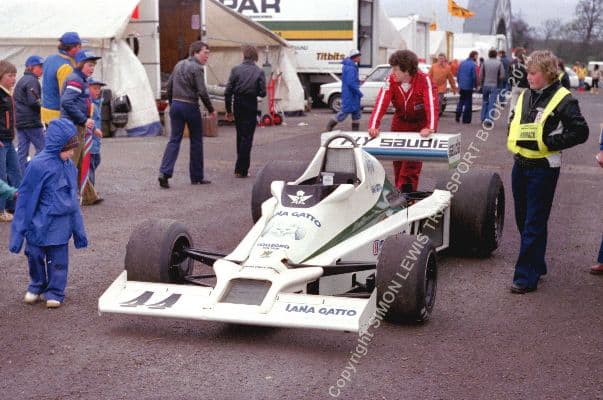
Today the general perception that Formula One is the be-all and end-all of motorsport is more marked than ever, with recent other-category innovations having failed to really grab headlines.  Formula E does not command very much interest and Sportscars/Prototypes in the hybrid era have failed to impress, having none of the aesthetic/technical/competitive charisma that we saw in the eras of Jaguar and Aston Martin at Le Mans, Ford vs. Ferrari in the 60s, 917 vs.512, 956 vs. Lancia and Sauber in Group C.  At the same time, ‘junior’ formulae such as F3 now lack pizazz, being spec formulas, with little of interest in technical developments/differing car capabilities.  So, from a contemporary perspective, we would expect that a F1 seat would necessarily represent the pinnacle of any driver’s career.  On that basis, I’m showing below the Williams FW06 that Giorgio Pianta piloted in 1979:


And although Pianta scored an excellent 5th place at Nogaro in that car, his career highlights can be chosen, mixed and matched, from this more than impressive list: 1965 Italian Rally Trophy; 1966/67 European Touring Car Championship campaigns with Squadra Corse Lancia and Porsche; team ETCC driver with Autodelta, 1968/69; class winner of the Italian Touring Car Championship, 1971/72 and developed the 1971 Targa Florio class winner for Conrero; 3rd in an Osella in the Targa Florio in 1977; developed the Fiat Abarth 124 Rally and X1/9 competition models; 1986-96, manager of Alfa Romeo Corse, in which period the Marque achieved many wins in Touring Car racing, including a spell of domination in the DTM; subsequently returned to Fiat to take charge of Fiat Auto Corse.  During his main driving career, Pianta took part in around 700 race events, winning three Italian National Championships.  This article is focused on Pianta’s circuit racing activities/career – he also saw much achievement in the realms of rallying, not covered here, but well documented elsewhere. 

The earliest regulated motorsport participation recorded for Giorgio was a drive in the Mille Miglia in 1953.  Pianta was at that time 18 years old.  He shared the wheel of an Alfa Romeo 1900 Ti with Piero Palmieri, but they failed to finish. 

An outing at Monza five years later saw him competing in a GT Cup race organised by the renowned Sant Ambroeus scuderia.  Giorgio is seen below in his Fiat 500.


Nowadays, the importance of networking is emphasised to people beginning their commercial career, as if a recently invented ‘science.’  Yet, over sixty years ago, Giorgio was proving himself a natural, effective practitioner.  He managed to arrange for himself a co-drive with the son of Ferrari’s Eugenio Dragoni in an Abarth 1000 TC.  Exploits in this car attracted the attention of Sandro Fiorio, PRO for Lancia.  This turned out to be an especially rewarding contact, as Sando’s son, Cesare, was responsible for the Lancia HF Squadra Corse.  Thus, in 1963, Giorgio found himself with a ‘works’ Lancia drive.  As a result, he was soon at the wheel of such cars as the Flaminia Sport, as seen below at Monza:


Giorgio also remained associated with the Scuderia Sant Ambroeus for several years, driving various of its cars, for instance: Ferrari 250 GT SWB in 1962, Alfa Romeo TZ in 1964 and the arcane ASA RB 613 in 1965’s Targa Florio.  Partnering Giorgio Bassi, a 3rd in class resulted.  The car is seen below:

Courtesy of Vittorio Giordano

1966 saw Pianta co-driving with Lancia rallying star, Sandro Munari, at the Nurburgring 500, where they took their Flavia Sport Zagato to 4th in Division 3 of the Touring Car class:

Courtesy of H-J Roegler

The following season was a notably successful one for Pianta in touring cars, this time in a Division 3 Scuderia Sant Ambroeus 2.0 Porsche 911.  Best results of the year were the outright victory in Belgrade, and a class win in Budapest. 

By early 1968, his recent performances in touring cars had impressed Carlo Chiti enough for him to recruit Giorgio to the Autodelta driving contingent.  Pianta soon repaid Chiti’s confidence with a Division 2 class win at Monza in a Giulia Sprint GTA 1600, co-driven by Teodoro Zeccoli.  For Le Mans that year, Pianta was back with Scuderia Sant Ambroeous, entrusted in company with Enrico Pinto with the team’s Iso Rivolta.  But the car was accident damaged in practice and thus failed to make the start.

The Sant Ambroeus Iso Rivolta for Pianta/Pinto, Le Mans, 1968

Giorgio rounded off the Sixties with drives of increased diversity, both in terms of entrants and types of car – BMW 2002 Ti – Porsche 910 – Lancia Fulvia HF;  Escuderia Nacional CSEcurie Nat. Espagnole.  Another ‘new’ employer coming to note in 1970 was Monzeglio Corse, which entered an AMS-Alfa for the Targa Florio to be driven by Giorgio and Mario Zanetti.  And they made a good job of it: winners of the P 1.3 class.

Left: In the Targa Florio pits, (Schlegemilch). Right: Courtesy of John Phillips

Virgilio Conrero was a significant personality on the Turin automotive scene, especially so in the Fifties/Sixties when he was closely associated with Alfa Romeo.  For engine tuning and modifications requested by customers and motor sport Alfisti, Conrero fulfilled the role eventually performed by Autodelta when set-up as a factory ‘extension.’  In fact, the establishment of Autodelta and thus a loss of business volume, led Conrero to branch out into enhancement developments for other makes and to step up his focus on Renault engines, which had been a secondary interest during the period of concentration on Alfa Romeo.  But perhaps the most important new involvement was with the Opel brand.  A major strand of this was an agreement with General Motors to utilise his Conrero Squadra Corse to run Opel products on-track.  The project was facilitated by the efforts of Romano Artioli, leading dealer for Opel in Italy.  He maintained a steadfast optimism that the GT model could be made an effective Group 4 racer and persuaded Conrero to commit to its development, whilst he also managed to raise necessary funds from his fellow Opel dealers.  Eventually, this enabled chassis improvements to be made and an engine output of near 200 bhp achieved – impressive, considering that the standard production version boasted just 88 bhp.  Conrero took Pianta on to play a lead role in this work, drawing on Giorgio’s extensive experience in developing cars for competition.  It proved to be a very successful arrangement, with Pianta becoming the large engine class winner in a 3.0 Opel Commodore of the Italian Touring Car Championship in both 1971/72.  At the same time, he oversaw modifications to, and the preparation of, four Opel GT 1900s for the 1971 Targa Florio.  Against tough opposition – especially numerous Porsche 911s - the example driven by Paolo Monti and Salvatore Calascibetta achieved an excellent 9th overall, first in class finish.  Pianta also co-drove, with Pino Pica, but his Opel was forced to retire on the fourth lap.  Also failing to finish was the similar car of Giuseppe Marotta and Gianpaolo Benedini.

1971 Targa Florio. Left: Marotta/Benedini, courtesy Sergio Tino; 
Centre: Pianta/Pica, courtesy Maurice Van Sevecotte; Right: Monti/Calascibetta, ©Schlegemilch

Conrero mounted a similar effort for the 1972 Targa.  Further development had resulted in a new cylinder head, enabling an increased power output of over 200 bhp.  Of the three GTs entered, two were carburettor-equipped, whilst that to be driven by Pianta and Giorgio Schön featured Kügelfischer mechanical fuel injection, and this enabled a further power increase, to 214 bhp.  This was enough for Pianta to be able to post a 2000 cc class fastest time in practice, significantly below what the Porsche competition was managing.  However after an enforced power unit change, the engine could not be fired-up for the start of the race.

1972 Targa Florio. Pianta/Schön in practice. Courtesy Revs Institute

Giorgio reverted to his 1971 partner, Pino Pica, for the 1973 event.  On this occasion they were flying the Conrero colours on a sports racing car which had been created in 1972 for Momo proprietor, Giampiero Moretti.  The car’s designer was Giorgio Valentini, (also known for designing the BWA single seaters, Bertone Panther, Mystère prototype and Osella FA1C).  Valenti began work on the design in September 1971.  Moretti had requested several innovations, in particular in the suspension and steering layout/operation and inboard brakes.  It was a super-light-weight chassis – the frame being just 55 kgs – with a quick-change, transverse fuel tank.  As initially raced by Moretti/Corrado Manfredini at the 500 kms of Interlagos in 1972, the car was powered by a 265 bhp Abarth-Osella 2.0, but, as taken over by Conrero, it was fitted with an Opel unit as was used in the racing GT 1900s.  But, once again, Pianta suffered the disappointment of a race non-finish, the car being retired after 4 laps.

Conrero-Opel on 1973 Targa Florio (Pica driving)

Also in 1973, Giorgio raced a Lola T280-Ford DFV for Jolly Club at three major events.  Again partnering Pino Pica, a 7th place finish was achieved at the Dijon 1000 kms.  The pair were together once more for the Monza 1000 kms but were out before quarter distance due to a failed coolant hose.  Further disappointment followed at the Nurburgring 1000 kms for Giorgio and co-drivers, Mario Casoni and Manfred Mohr, when gear linkage problems caused an end to their race after just 6 laps.

1973 World Championship for Makes, Lola-Ford 280. Left: Nurburgring (Courtesy Girardo);
Centre: Monza (MotorsportImages); Right: Dijon (MotorsportImages)

Jolly Club replaced the car with a T282 model for the 1974 season, again enlisting Giorgio to drive it.  At the Monza 1000 kms, a race dominated by the Alfa 33s, Pianta/Pica finished 6th after winning a close battle with the Porsche 908 of Joest/Casoni.  At Spa, the Lola was sidelined with ignition failure.  He used the same car for the Targa Florio, qualifying it fastest of the entire field.  This was the first year after the Targa’s de-rating as a championship event, so the competition was less intense than formerly, but Pianta’s achievement in taking pole is validated by the fact that he outpaced the two Stratos entered by Lancia Corse.  However, the car failed to finish the race, suffering a rear tyre failure after 4 laps.  In the photograph below, Pianta is seen in the centre, behind the rear wing.


Towards the end of the year, in October, Pianta shared the Abarth works’ Fiat Abarth SE030 with Christine Beckers on the Giro d’Italia.  This was a new product development car which was a forerunner of the Lancia Montecarlo.  In addition to looking good, it ran well too, and was bettered in the event only by the Group 5 Lancia HF Squadra Corse Stratos Turbo of Jean-Claude Andruet and Michèle Espinosi-Petit.  On this event the following year, Pianta went one better and took the overall first place in a Group 5 Fiat Abarth SE031, this time co-driving with Bruno Scabini.

Left: Partnering Christine Beckers on the Giro d’Italia, 1974, ©Pininfarina,
and, right, co-driving to victory on the same event, 1975, with Bruno Scabini

Otherwise in 1975, Giorgio was putting mileage on Jolly Club-liveried Lolas, partnering with Vittoria Brambilla, but it proved to be a run of races that was characterised by DNFs and accidents.  No doubt he was pleased to get his hands on a Scuderia Aneneo/Jolly Club Stratos for the Targa Florio, and, sharing the driving with Giorgio Schön, he made the most of the opportunity, finishing 7th, 4th in class.

1975 Targa Florio – Pianta/ Schön (Targapedia)

Giorgio’s best showing in 1976 was at Salzburg, where, in the 200 mile Salzburger Festspielpreis race, he came in 6th, 3rd in the 2.0 class.  This was in a Jolly Club Osella PA3.  Around this time, Giorgio was more often at the wheel of Osellas, where previously he had had a run of Lola drives.  In the Targa Florio of 1977 he was again paired with Giorgio Schön and they had an Osella PA5 BMW at their disposal.  In this, the last (though lesser status) Targa, and on his tenth entry for the event, Pianta achieved his best result - 3rd overall and 2nd in the 2.0 class.  The Jolly Club car, with Giorgio at the wheel, in the pits, is shown below:

Courtesy of Vittorio Giordano (Targapedia)

Pianta followed up the Targa success with an even better one 17 months later, sharing the Giro d’Italia-winning Group 5 Stratos HF with Markku Alén and Ilkka Kivimäki:


1979 was a season which reflected Pianta’s involvement at Corse Lancia where he was significantly instrumental in developing the Montecarlo model for the track, creating the turbocharged version which was highly successful in seasons, 1979-81 – see Any Tine, Any Place – Montecarlo for Instance.  In addition to much effort contributed in the workshop and on the test track, Giorgio drove early versions of the Montecarlo at the 1979 Six Hours races at Mugello, Silverstone and Vallelunga.  Whilst these outings resulted in non-finishes, the performances helped to establish the car’s competitiveness and support developments for improved reliability. 

The Seventies/early Eighties had seen Pianta with a roving brief, testament to his versatility: leading test driver at Corso Marche for Abarth;  influential ‘behind the scenes’ at Lancia with the development of the S4 Delta;  at Alfa Romeo he strove without success to help establish an Indycar campaign with a March CA90 chassis powered by a 2648 cc turbocharged V8 engine.

Alfa Indycar Turbo V8 engine, 1990.
Courtesy of Roberto Motta

After a long period of uncertainty and its inability to return to profitability, Alfa Romeo was absorbed into the Fiat Group in 1986.  Autodelta’s ‘abolition’ had been commenced in 1982 when responsibility for running the F1 cars was transferred to Giampaolo Pavanello’s Euroracing team.  The operating base of Autodelta was moved to Senago, and, not long after, the business effectively closed with the Fiat buy-out.  As a replacement function, Fiat revived the Alfa Corse name and appointed Giorgio to run it as a factory department.  Initially, Pianta sought to revitalise the perception of Alfa Romeo as a leading light in motorsport by developing the Alfa 164 V10 Procar.  Though this project stalled, the engine was utilised in the development of a proposed new Group C prototype for endurance racing.  The car emerged after collaboration with Abarth as the SE048SP, but with a change of power plant to the Ferrari 3.5 V12.  However, by autumn 1990 it was apparent that the revised Group 6 rules for which the car was designed would not be attracting substantial entries from other manufacturers, and this project too was cancelled.
 
Left: 164 Procar. Courtesy of Michael Ward     Right: SE048SP Group C. ©Kevin Van Campenhout

After the disappointments of the aborted Procar and Group C programmes, Alfa Corse turned its attention to the touring car category with the Alfa 75 model.  Whilst this was relatively low-key, it laid the foundation for a more concerted campaign beginning in 1992 with the new 155 GTA model.  Promising though this appeared to be, the Ti AWD model was preferred for an assault on the DTM the following season.  With leading drivers Nicola Larini and Alessandro Nannini, the car was very successful in 1993 and the following three seasons, racking up 38 victories and winning the DTM in 1993 and the BTCC in 1994.  It has been reported that Pianta took every opportunity while running the programme to test cars on-track and was well known for being able to set fully competitive times. Going a stage further, it is said that he clandestinely drove in some races - in his appreciation of Pianta Peter Collins writes: 

At one time he was itching to drive a GTA in a race, but Fiat shuddered at the implications. He still did it, under the pseudonym of ‘Sonnenkinde’ – child of the sun. 

Collins also recounts this anecdote, attesting to Pianta’s driving abilities and attitude: 

Sometimes testing did not always work to plan.  One day at La Mandria, testing a Delta S4 on a circuit, the technicians called him in and told him that their telemetry showed that he was not driving quickly enough through a particular corner.  “But I cannot drive any quicker through there or I will have a large accident,” said Giorgio.  “Nonsense, the figures show that you can. Go out and try harder,” said the engineers.  Off went Giorgio, trying harder than ever (at that moment making loud puffing and wheezing sounds as of an S4 flat out).  Suddenly, there was silence.  After a while, a visibly shocked Giorgio arrived back on foot carrying the mangled remains of the driver’s door – there was little else left of the car.  “Was that fast enough for your machines?” asked Giorgio. 

After the period of Alfa Romeo touring car successes, Pianta was put in overall charge of Fiat Auto Corse, thus affording him opportunities to direct the sporting enterprises of Fiat, Alfa Romeo, Lancia and Abarth.  In addition, he was president of the Associazione Nazionale Corridori Automobilisti Italiani, (similar to the BRDC) and contributed to the work of the Italian motorsport governing body. 

Giorgio died in 2014 at the age of 79.


Saturday, November 5, 2022

One Last Time


1973 saw the 57th running of the Targa Florio on the Piccolo Circuito delle Madonie, Sicily.  A battle for victory by the 3.0 Sports Prototypes, especially the Ferrari 312 PBs and Alfa Romeo T33/TT/12s, was expected.  As it turned out, however, the race was won by the Martini Racing Porsche 911 RSR of Herbert Muller and Gijs van Lennep. Sandro Munari and Jean Claude Andruet were second in the new Lancia Stratos, with another Martini 911 RSR of Leo Kinnunen and Claude Haldi third.  And this was to be the last Targa that served as a round of the World Sportscar Championship, the circuit being deemed unacceptably hazardous in the wake of a spate of accidents to drivers, and injuries sustained by several spectators. In a pre-race accident, Charles Blyth, whose Lancia Fulvia had failed scrutineering, sustained fatal injuries.  During the race, Ferruccio Deiana crashed his Renault Alpine A110, killing a spectator. 

This account however focuses on the wide and diverse range of entries for the race.  Whilst the 312 and the 33 were outstanding racing cars in their era, several other distinctive machines - if much less well known - ran in 1973.  Seven of these are celebrated in the survey below. 

Momo-Conrero Opel
#19 Giorgio Pianta and Pino Pica

Virgilio Conrero’s early career included several highlights – honing his engine development/tuning expertise at Fiat; a key engineer with the Cisitalia/Porsche 360 F1 project; with his own constructor workshop - Autotecnica Conrero - newly established, he created a Ghia-bodied Conrero-Alfa Romeo 1900 and ran this in the 1953 Mille Miglia; numerous victories in the late Fifties/early Sixties; success with a Conrero Formula Junior car and with Alfa Romeo specials based on the Giulietta; collaboration in 1961 with Alejandro De Tomaso on a Grand Prix car with an Alfa Romeo Giulietta-based engine. 

After expanding his business during the Sixties by establishing ‘approved tuner’ relationships with Renault, Triumph and the burgeoning Japanese manufacturers, Conrero secured a substantial contract with Opel to build/prepare/run cars in competition on its behalf.  Positive results soon flowed, with Conrero’s version of the Opel GT beginning to take class honours in 1970.  The following season saw a class victory in the Targa Florio – with this car, Conrero had developed a Porsche-beater, raising his stock further. 

Encouraged by the success achieved with the GT, Conrero then developed an open top Group 5/6 prototype in the style of the Chevron B19 S, Lola T212 and Abarth 2000 SP; (there was comment that the body styling appeared to be a copy of the Ferrari 312 PB).  The car was entered for the 1973 running of the Targa Florio, with drivers Giorgio Pianta and Pino Pica.  Designated as a Momo-Conrero, the car is seen below with Conrero himself (standing) on the left:


The Momo association seems very natural – the brand’s founder, Gianpiero Moretti, and Virgilio Conrero were both charismatic and entrepreneurial figures on the Italian sports car racing scene in the era.  However, their collaboration this time was unsuccessful, the car being retired after 4 laps.  Indications were that the car’s pneumatic suspension had caused stability issues and the brakes did not stand up well to the demands of the Madonie circuit.1  It had been competitive though, with a 26th fastest race lap of 42'35"2 and was running in 7th place overall on laps 1 and 4.

1.www.targapedia.com/biblioteca/riviste/automobile_historique/tf_R_AutomobileHistorique_2001_05_TargaFlorio1973.pdf

Daren Mk. 3
#12 Jack Wheeler and Martin Davidson 

One of the lesser-known British sportscar marques is Fairthorpe.  In business for just short of twenty years in the Fifties to the early Seventies, the Buckinghamshire-based manufacturer made a variety of small sportscars primarily based on Triumph chassis/mechanicals/engines and utilising glass fibre body construction.  An ex-Daimler man, John Green, joined Fairthorpe as General Manager in the late Fifties.  He set about developing a new model and this proved to be a significant step forward for the company.  Called the Electron Minor, it became the leading Fairthorpe product. 

Along with his expertise as a manager and an engineer, Green could boast ability behind the wheel of a racing car.  So, it was not unexpected that he designed and built a track car in parallel with his work for Fairthorpe.  But thus, he became associated with another obscure British racing name, even less familiar to most than Fairthorpe - the Daren.  It was successful until regulation spurred Green to develop a new, lighter car, known as the Daren Mk. 2.  This had a more sophisticated, semi-monocoque construction and lent itself to series production.  In 1971, a Mk.3 was made for well-known club racer, Jack Wheeler.  Wheeler intended the car for some serious racing on the European scene, and, accordingly specified a pretty serious engine: the BRM P56/60 V8, Endurance/Tasman, 2.0 specification.  Six Mk. 3s were built and several entries are recorded in the 1971/2/3 seasons.  Reliability was not especially good – from 35 starts there were only nine finishes and the best result was a second, (for Arthur Collier in a SMRC event at Ingliston). 

Partnered by Martin Davidson, Wheeler took the car to Sicily for 1972’s Targa Florio.  The effort/expense was not however very well rewarded, the Daren failing to complete the first lap as a result of ignition trouble.  Undaunted, they were back for the 1973 event, and, though  two laps down, were still running at the finish, classified as 29th overall, 7th in class.  It was an encouraging outcome and Wheeler must have been hopeful as he arrived in Germany two weeks later for the Nurburgring 1000 kms.  Initially in Practice, the car was competitive amongst the 2 litre opposition – RSR, Lola T290, Chevron B21/23, for example – qualifying 33rd in a 52 car field.  However, with only one lap completed, the engine was subject to a valve failure and had to be retired.

Scrutineering stickers on the Daren

The Daren Mk.3 driven by Wheeler/Davidson to 7th in class.  ©Bernard Cahier

In 2020 the car, unrun since that Nurburgring disappointment 47 years earlier, was sold as a rolling chassis by Bonhams at Goodwood for £18,400 – details here.


AMS 273

11 chassis - #43, #47, #63, #65, #68, #69, #82, #83, #84, #86, #87

At the outset of his engineering career, Tancredi Simonetti worked firstly at OSI, (Officine Stampaggi Industriali), the Ghia subsidiary in Turin.  This business, set up to build special small production volume models, primarily for Fiat and Ford, became defunct in 1967, prompting Simonetti to start constructing a car of his own design.  He based it on a prototype developed by the remnants of the ATS, (Automobili Turismo e Sport) business that had briefly blossomed as a breakaway of talent from Ferrari in 1962.  Simonetti formed a new company, Attrezzature Meccaniche Speciali (AMS) to produce his 1.0 car and Scuderia Autoracing to run it.  From 1969 to 1972 AMS ‘1000 SP’ chassis ran with a variety of engine makes and displacements, becoming successful and popular with owner/drivers and small teams.  An improved model, designated 273, was introduced in early 1973, and no fewer than 11 of these were to be seen on that year’s Targa Florio.  Quite an impressive representation for such a small/’young’ builder, especially in comparison with the numbers running for some of the heavy hitters: Porsche, 17; Alfa Romeo, 17; Lancia, 13.  Engines powering the 273s were: Alfa Romeo 1600; Ford Cosworth 1000, 1300 and 1600; Giliberti-Ford 1600; Giliberti-Alfa 1300; Giliberti-Fiat 1000 and 1300. 

Best result was for #65, the AMS-Ford of Pasquale Anastasio and Giovanni Lo Voi, 15th overall and 1st in class:

Anastasio/Lo Voi, 15th. Courtesy Piergiorgio Ferreri

#47, a Giliberti-Cosworth-engined 273 took Vito Veninata and Giuseppe Iacono to 38th overall, 5th in the 1.3-1.6 class.  #84, with Ford power, was driven to 40th, 2nd in the 1.0 class, by Stefano Sebastiani and Antonio Palangio:


Six of the AMS cars failed to finish – shown below, top row, left to right: #43 of Vimercati/Cocchetti; #63 of Di Cristoforo/Lo Piccolo; #69 of Manzo/Nicolosi.  Lower row, left to right: #82 of Verrocchio/De Antoni; #83 of Donà/Govoni; #86 of  Bartoli/"Jorkrysa."


Two driver pairings ran but were unable to qualify for the race:  Gianfranco La Mazza and Massimo Cavatorta in a Ford-engined example, and Salvatore Barraco and Giuseppe Virgilio, whose AMS was powered by a Giliberti-Fiat 1300. 

Only a couple of AMSs appeared at the following year’s emasculated Targa Florio.  The marque’s cars were active on the sports racing scene for the remainder of the decade, but the 277 model was the last of the line.

CR CDS 134B
#62 Salvatore Calascibetta and Alfonso Merendino

My earlier use of the term ‘less well known’ is inadequate in regard to this car!  Very little has been documented about the machine, though its lead driver has been celebrated for his persistence – he ran in the Targa Florio 13 times.  This was mainly on an amateur and largely self-financed basis, though he scored a class win driving an Opel for the Conrero-run factory team in 1971. 

I have been unable to find any trace of the ‘CR CDS 134B’ running in any other event.  As to its origin, the best clue is that in a couple of brief mentions, the car is described as ‘artisan-made’/’handcrafted.’  Since Salvatore ran a workshop in Palermo, my best guess is that he ‘designed’ and built the car from scratch.  As to nomenclature, C R perhaps stands for Calascibetta Racing and the prominent CDS sponsorship decals refer to the proprietary electronic ignition coil/unit - so it's likely that Salvatore derived some funding from this commercial source. 

The car was entered by ‘Krista Buchwald’ – this name is recorded only once and only in regard to the 1973 Targa Florio.  Motive power was provided by an Abarth-tuned Fiat 1300 engine.  It ran until the 7th lap, on which it broke down with fuel starvation and had to be retired.

CR CDS 134B of Calascibetta/Merendino. Courtesy Vittorio Giordano

GiGi P2 Speciale
#64 Antonio Riolo and Giuseppe Garofalo 

The Riolo family automotive retailing business expanded in its Palermo premises from a general garage to a multi-franchise dealership over the post-war years.  In the Sixties/Seventies, it was mainly a Lancia and Citroen representative.  Today its primary focus is with the Audi brand. 

Antonio’s 1973 Targa Florio adventure seems to have been a one-off – as was that of co-driver, Giuseppe Garofalo.  The same can be said for the car – it does not appear in any other race results database.  I understand – but have not so far confirmed – that it was eventually acquired by prominent Lancia enthusiast, Loris Giorgetti.  This would be logical as the GiGi was powered by a Lancia 1300 engine, (Fulvia spec I imagine). 

The P2 was entered by Scuderia Pegaso. The Palermo-based Scuderia had first tackled the Targa Florio in 1964, running a contingent of characterful cars: 2 Alfa Sprint Zagatos, an Alfa Giulietta SS and an Abarth Simca 1300 Bialbero.  The team added Lancia and Ferrari models for the following year and continued to make the Targa Florio its principal interest – with the occasional excursion to Mugello, Vallelunga and Monza – through to 1974. 

The car has a rather strange appearance in contemporary photographs as the ground clearance looks unusually large, there is a curious reverse rake and the tyres – especially the fronts – are less wide than might be expected.  Despite these possible disadvantages, Riolo/Garofalo brought it home 24th, 2nd in class.

Left to right: GiGi P2 in the pits; on its way to 2nd in class; the Riolo Palermo dealership


Bizzarrini 128P Fiat 

#66 Massimo Larini 

Giotto Bizzarrini’s consultancy became known as Bizzarrini S.p.A. after his spell working with Iso ended in 1966.  Under his own name Bizzarrini then produced the much lauded 5300 GT Strada model, but the engineering was more accomplished than the business management, and the company had failed by 1969.  His activities from then became spasmodic and fragmented, though still characterised by flashes of brilliance.  In 1971, as something of an indulgence, he set about designing and building a competition car specified on the basis of a personal ideal.  Thus, came about the 128P Barchetta.  Two chassis were constructed, the Targa Florio-running example being exhibited currently in Turin’s Museo Nazional dell’Automobile.1

Bizzarrini 128P as displayed in the Nazional dell’Automobile  Courtesy David Tarallo

The Fiat 128 engine was uprated to output around 130 bhp.  Given Bizzarrini’s reputation as a very accomplished suspension/steering tuner, much was expected of the car on the Circuitto Piccolo.  In the event, qualifying did not go too well, the car being 73rd of 81.  The race was even less kind – Larini having to retire it with accident damage on the first lap – thus neither Bizzarrini nor Antonio Finiguerra, who had been entered, actually drove it.


Bizzarrini 128P on the Targa Florio

A superb set of detail photographs of the sister car can be seen here  - they were posted at the time of its sale by auction in 2019.  Also reproduced is an illustrated Ruoteclassiche magazine article about that car’s ‘rescue’ and restoration.
Ruoteclassiche magazine article

Giotto Bizzarrini at work on the 128P

1. More photographs of the Museum installation of the 128P can be seen on David Tarello’s blog, Pit Lane Italia 

To round off this survey I’m including a car that evades my opening criterion regarding characterisation as being ‘less well known.’  This car would be making big news in the world of international motorsport throughout the decade.  It was wonderfully distinctive in its functional capability and both innovative and attention-grabbing in its looks.  It’s just that in May 1973 it was the new kid on the block, albeit one that would grow up very quickly . . 

. . . Lancia Stratos
   
#4 (and #4T) Sandro Munari and Jean-Claude Andruet

Lancia’s new flagship competition car broke cover in prototype guise in 1971.  However, it was not seen in its definitive form until 1973 by when the distinctive Marcello Gandini styling had been further refined and, after a period of indecision, the Ferrari Dino engine confirmed.  With production of the 500 examples required for FIA homologation ongoing, a Stratos was making its World Championship circuit racing debut at May’s Targa Florio.  The race-run car entered is said to have been #0002 and it wore race number 04, with Sandro Munari and Jean Claude-Andruet at the wheel.  A second chassis was used in practice, identified with race number 4T and Turin road-registered, PROVA TO 1098.  The car sustained damage to the left hand side. 

As well as looking sensational, #04, ran reliably, avoiding the suspension problems that had afflicted the car’s very first rally outings. And it’s 280 bhp V6 engine made it fully competitive with the 911 RSRs, despite the Porsches having about 35 more bhp on tap.  This was thanks to the car’s handling characteristics and its weight being around 60 kgs lighter than the 911’s 940 kgs.  It finished second, with a deficit of just 6 minutes, between the winning RSR of Muller/van Lennep and that of third-placed Kinnunen/Haldi.  Munari’s fastest race lap was quicker than all but one of the numerous Porsches, and was bettered only by Muller, the two Ferrari 312 PBs of Ickx and Merzario and the Alfa 33 of Stommelen.  The Stratos moved up to third place on Lap 3, second on the following tour, and remained there for the rest of the race.  So no fluke, and not a late-inherited position:  it must have been a very encouraging outcome for the Lancia Corse team.

Left, 2nd place for Stratos #4;  Centre, rear view. Courtesy Revs Institute for Automotive Research;  Right, T car. Courtesy Effe Model Cannata

Much of the information (and images reproduced) in this article has been derived from the excellent website, ‘Targapedia,’ the work of Enzo and Federica Manzo – I’m very grateful to them for all their work and diligence in creating and maintaining such a valuable motorsport history resource.